Stretch Mark Recovery: Expert Treatments for Postpartum Skin
Postpartum stretch marks are one of the most common skin changes women experience after pregnancy. As the abdomen, breasts, hips and thighs expand during pregnancy, the skin undergoes considerable stretching. For some women, these changes leave behind red, pink, purple, brown or white lines known as stretch marks, or striae distensae.
After childbirth, many women expect their skin to return to how it looked before pregnancy. While some stretch marks naturally become lighter and less noticeable with time, they do not always disappear completely.
This is why searches such as “do stretch marks go away,” “postpartum stretch mark treatment,” “stretch mark removal after pregnancy,” and “stretch marks treatment after pregnancy” are so common.
The good news is that postpartum stretch marks can often be improved in appearance. Modern aesthetic treatments can target skin texture, collagen remodelling and the overall visibility of stretch marks.
However, it is important to have realistic expectations.
Stretch marks are a type of scar. Professional treatment may make them less noticeable, smoother and more even-looking, but no treatment can guarantee complete removal of every stretch mark.
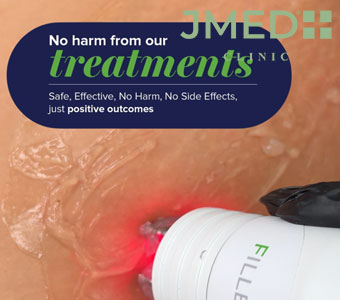
For women looking for a specialised approach in Dubai, JMED Clinic offers the JMED Stria Repair Method™, a proprietary stretch-mark protocol developed by Jurgita Jasiunaite. According to JMED, the method combines precision needling, FillerX technology and professional Italian cosmeceuticals as part of a personalised treatment approach.
What Is the Best Way to Treat Postpartum Stretch Marks?
There is no single treatment that is best for every woman.
The appropriate approach depends on:
- How long ago you gave birth
- Whether the stretch marks are red, pink, purple or white
- Their depth and texture
- The treatment area
- Your skin type
- Whether you are breastfeeding
- Your medical history
- Previous treatments
- Your expectations
Postpartum treatment options can include:
- Microneedling or precision needling
- Laser-based treatments
- Radiofrequency-based procedures
- Combination treatment protocols
- Professional cosmeceutical support
- Other collagen-remodelling treatments
Recent systematic reviews show that stretch-mark treatments vary considerably and that no single treatment has emerged as universally superior. Energy-based treatments, including lasers and radiofrequency with microneedling, have shown promising results, while combination approaches may improve outcomes.
At JMED Clinic, the JMED Stria Repair Method™ takes a combination-based approach to stretch-mark treatment.
What Happens to Your Skin After Pregnancy?
Pregnancy causes major changes throughout the body.
As the abdomen grows, the skin stretches to accommodate the increasing size. The breasts, hips and thighs may also change significantly.
Stretch marks develop when the skin stretches or shrinks quickly and structural changes occur in the dermis. They are therefore not simply a surface-level pigmentation problem. The American Academy of Dermatology describes stretch marks as a type of scar.
After delivery, the body gradually begins recovering from pregnancy.
However, the skin does not necessarily return to its previous condition immediately.
You may notice:
- Loose or softer abdominal skin
- Changes in skin texture
- Stretch marks
- Uneven pigmentation
- Reduced skin firmness
- Changes around the breasts, hips or thighs
These changes can continue evolving for months after childbirth.
That is why postpartum skin recovery should be viewed as a process, rather than something that needs to be “fixed” immediately.
Why Do Stretch Marks Develop During Pregnancy?
Pregnancy stretch marks are associated with a combination of skin stretching, hormonal influences and individual susceptibility.
Several factors may increase the likelihood of developing them.
Rapid skin expansion
As the abdomen and other body areas grow, the skin is placed under mechanical stress.
Hormonal changes
Pregnancy hormones can influence the skin’s connective tissue and its response to stretching.
Genetics
Some women are genetically more likely to develop prominent stretch marks.
Changes in body weight
Pregnancy-related changes in body size can contribute to skin stretching.
Individual skin characteristics
Collagen, elastin and other structural characteristics differ from person to person.
This explains why one woman may develop extensive belly stretch marks, while another may develop only a few fine lines.
What Do Postpartum Stretch Marks Look Like?
Stretch marks do not look the same throughout their development.
Early Stretch Marks
Newer marks may appear:
- Red
- Pink
- Purple
- Reddish-brown
- Darker than surrounding skin
These are often referred to as striae rubrae.
Mature Stretch Marks
Over time, many stretch marks become:
- White
- Silver
- Pale
- Slightly depressed
- More noticeable because of their texture
These are commonly referred to as striae alba.
The stage matters because newer and mature stretch marks can respond differently to treatment. Current evidence suggests that treatment outcomes vary considerably between different types of striae.
Do Stretch Marks Go Away After Pregnancy?
Some stretch marks naturally become less noticeable, but they do not always disappear completely.
This is one of the most important things to understand about postpartum skin recovery.
Immediately after pregnancy, stretch marks may look more prominent because they are still relatively new.
Over time, their colour often fades.
However, the underlying changes in the skin may remain.
The American Academy of Dermatology explains that stretch marks are scars and that treatments can help make them less noticeable, but they should not be viewed as something that can always be completely erased.
So if you are asking:
“Do stretch marks go away?”
The most accurate answer is:
They may fade naturally, but established stretch marks often remain to some degree. Professional treatment may improve their appearance.
I’m 4 Months Postpartum. Can I Treat My Stretch Marks?
If you are 4 months postpartum, it is understandable to start researching treatment.
However, the correct time to begin a procedure depends on your individual recovery, health, breastfeeding status, medications and the specific procedure being considered.
At this stage, you may still notice significant changes in your body and skin.
A consultation can help determine:
- Whether your skin has sufficiently recovered
- Whether your stretch marks are still changing naturally
- Whether you are breastfeeding
- Whether any ingredients or procedures should be postponed
- Which treatment options may be appropriate
If you are breastfeeding, pregnant again, taking medication or have recently undergone surgery, tell your treating professional before starting an aesthetic procedure.
Pregnancy and breastfeeding can affect which skincare ingredients and procedures are appropriate. The AAD specifically recommends discussing skincare and medications with your obstetrician or dermatologist during pregnancy and breastfeeding.
The Postpartum Stretch Mark Healing Process
Understanding the stretch mark healing process helps explain why results do not happen overnight.
Stage 1: Skin stretching
During pregnancy, rapid changes in body size place mechanical stress on the skin.
Stage 2: Formation
Structural changes occur within the dermis, resulting in visible lines.
Stage 3: Early stretch marks
The marks may initially appear red, pink, purple or darker than the surrounding skin.
Stage 4: Natural maturation
Over time, the colour usually becomes less intense.
Stage 5: Mature stretch marks
The marks may become white or silver and can develop a different texture from surrounding skin.
Stage 6: Treatment and remodelling
Professional treatments may stimulate controlled skin repair and collagen remodelling, potentially improving texture and visibility.
This is why stretch mark recovery after pregnancy should be viewed as gradual.
Can Postpartum Stretch Marks Be Completely Removed?
This is one of the most important questions to answer honestly.
Complete removal cannot be guaranteed.
Stretch marks are scars, and even the most advanced treatments aim primarily to make them less noticeable rather than promise perfectly restored skin.
A 2026 systematic review of stretch-mark treatments found evidence for improvement with several approaches, including lasers and radiofrequency-based treatments, but concluded that current evidence does not support one universally best treatment.
This means phrases such as “permanent stretch mark removal” should be treated carefully.
A better treatment goal is:
- Reduced visibility
- Improved texture
- More even-looking skin
- Improved skin quality
- Less contrast between stretch marks and surrounding skin
- Greater confidence in the treated area
Postpartum Stretch Mark Treatment Options
There are several professional options for women seeking postpartum stretch marks treatment.
The right treatment depends on the individual.
1. Microneedling / Precision Needling
Microneedling uses very small needles to create controlled micro-injuries in the skin.
These micro-injuries stimulate the body’s wound-healing response and collagen production.
The AAD describes microneedling as a minimally invasive treatment that can be used for stretch marks and works by stimulating collagen production.
Potential goals include:
- Improving skin texture
- Stimulating collagen
- Reducing the visibility of stretch marks
- Creating a more even skin surface
The treatment should be performed by a properly trained professional.
2. Laser Treatment
Laser technology is another option used for certain types of stretch marks.
Depending on the device, laser treatment may target:
- Redness or colour
- Skin texture
- Collagen remodelling
- Overall appearance
This is why searches for stretch mark laser treatment, stretch marks treatment, and stretch marks treatment options are common.
However, laser treatment is not automatically the best choice for every woman.
Skin tone, stretch-mark type and treatment goals need to be considered before selecting a laser.
A systematic review published in 2026 found promising results for both ablative and non-ablative lasers, while also highlighting limitations in the quality and consistency of available evidence.
3. Radiofrequency-Based Treatments
Radiofrequency treatments use controlled energy to heat targeted tissue.
Depending on the device and protocol, RF may be used to support:
- Collagen stimulation
- Skin firmness
- Texture improvement
- Skin remodelling
Some technologies combine radiofrequency with microneedling.
This combination can be particularly relevant when both texture and firmness are concerns.
4. Combination Treatments
Stretch marks are complex skin changes, so combining treatment modalities may sometimes provide a more comprehensive approach.
A combination protocol may include:
- Precision needling
- Energy-based technology
- Professional cosmeceuticals
- Skin-regeneration techniques
- Personalised home care
Recent evidence suggests combination approaches can be useful, although the evidence base remains heterogeneous and treatment response varies.
This is the principle behind the JMED Stria Repair Method™.
Postpartum Stretch Mark Treatment: Which Option Is Right for You?
|
Treatment approach |
What it may target |
Important consideration |
|
Precision needling |
Texture and collagen remodelling |
Requires professional technique |
|
Laser |
Colour, texture and collagen response |
Device should be selected according to skin type |
|
Radiofrequency |
Firmness and collagen stimulation |
Technology and settings matter |
|
Combination protocols |
Multiple aspects of stretch marks |
Requires personalised planning |
|
Topical skincare |
Hydration and skin comfort |
Does not guarantee removal of established marks |
There is no universal treatment that works equally well for everyone.
The most appropriate approach should be determined following a professional assessment.
JMED Stria Repair Method™ for Postpartum Stretch Marks
For women looking for a specialised postpartum stretch mark removal approach in Dubai, JMED Clinic offers its proprietary JMED Stria Repair Method™.
According to JMED, the method was developed by Jurgita Jasiunaite and is specifically focused on stretch-mark regeneration.
The protocol combines:
- Precision needling
- FillerX technology
- Professional Italian cosmeceuticals
- Individualised treatment planning
Rather than treating a stretch mark simply as a superficial line, JMED’s approach focuses on the quality and appearance of the affected skin.
How Does the JMED Stria Repair Method™ Work?
Step 1: Individual Skin Assessment
Every postpartum body is different.
The first step is assessing the stretch marks and surrounding skin.
The specialist may consider:
- Age of the stretch marks
- Colour
- Depth
- Texture
- Body location
- Skin type
- Skin sensitivity
- Previous treatments
- Postpartum status
This allows the treatment plan to be tailored rather than using a one-size-fits-all protocol.
Step 2: Precision Needling
The JMED protocol incorporates precision needling.
Controlled micro-stimulation is used to activate the skin’s natural repair response.
Microneedling more broadly has evidence for improving the appearance of scars and stretch marks by stimulating collagen production.
The exact technique, depth and treatment frequency should always be determined by the treating professional.
Step 3: FillerX Technology
FillerX is another component of the JMED Stria Repair Method™.
According to JMED, the technology is incorporated into its skin-regeneration protocol to support the treatment of stretch-mark-affected skin.
The clinic combines this technology with its specialised treatment approach rather than positioning it as a standalone solution.
Step 4: Professional Italian Cosmeceuticals
The JMED approach also incorporates professional Italian cosmeceuticals.
These formulations are used as part of the broader treatment protocol to support the skin during the regeneration process.
The purpose is not simply to cover or moisturise the stretch marks, but to complement the in-clinic treatment.
Step 5: Post-Treatment Skin Care
After a professional treatment, appropriate aftercare is important.
Depending on the procedure, aftercare may involve:
- Gentle cleansing
- Skin hydration
- Sun protection
- Avoiding unnecessary irritation
- Following the clinic’s instructions
- Allowing the skin to recover between sessions
Your exact aftercare should be based on the procedure performed and your individual skin.
Why Is JMED’s Approach Different?
Many people begin their stretch-mark journey by trying:
- Oils
- Creams
- Home remedies
- Supplements
- Scrubs
- Random online recommendations
These approaches may help with general skin care, but they do not necessarily address established stretch marks.
The JMED Stria Repair Method™ takes a different approach by combining professional technology, precision treatment and cosmeceutical support.
The objective is to work on the appearance and quality of stretch-mark-affected skin rather than simply moisturising its surface.
Meet Jurgita Jasiunaite: Stretch Mark Repair Expert
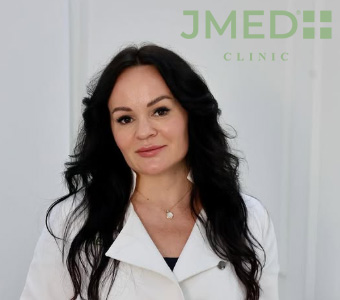
Jurgita Jasiunaite is the founder of JMED Clinic and creator of the JMED Stria Repair Method™.
JMED presents her as a specialist in skin regeneration and the developer of its dedicated stretch-mark treatment methodology.
Her approach focuses on combining professional skincare formulations with technology and precision treatment.
For women specifically searching for a stretch mark repair expert, working with a practitioner who has developed a dedicated stretch-mark protocol can provide a more focused treatment experience.
The goal is not to promise that every mark will disappear, but to create a personalised strategy for improving the appearance of postpartum skin.
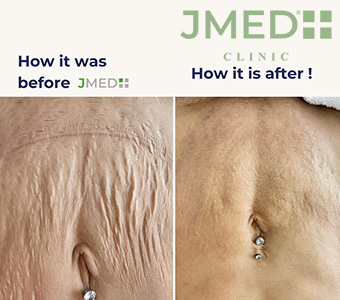
Postpartum Stretch Marks Before and After: What Should You Expect?
People frequently search for “postpartum stretch marks before and after,” “healed stretch marks,” “stretch marks before and after treatment,” and similar terms because they want to know what realistic results look like.
Before-and-after photographs can be useful, but they should be interpreted carefully.
A patient’s result depends on:
- Age of the stretch marks
- Skin tone
- Depth
- Treatment method
- Number of sessions
- Individual healing
- Aftercare
- Photography conditions
Lighting, camera angle and skin hydration can also dramatically change how stretch marks appear in photographs.
Therefore, a before-and-after image should be viewed as an example of one person’s response, not a guarantee of your result.
For the most accurate expectation, ask the clinic to explain what improvement may realistically be achievable for your particular stretch marks.
How Many Treatments Are Needed?
There is no universal number of sessions.
The treatment plan can depend on:
- The extent of the stretch marks
- Their depth
- Their age
- Their colour
- The treatment method
- Skin response
- Recovery between sessions
Collagen remodelling is gradual, so expecting dramatic results after one session may create unrealistic expectations.
A professional treatment plan should include an appropriate interval between sessions and regular evaluation of progress.
How Long Does Stretch Mark Recovery Take?
Stretch mark recovery is gradual.
After treatment, the skin may initially experience temporary redness, sensitivity or swelling depending on the procedure.
The longer-term improvement occurs as the skin undergoes its natural healing and remodelling processes.
This means there are two different timelines:
Immediate recovery
This relates to how quickly the skin settles after the procedure.
Long-term improvement
This relates to how the skin changes as collagen remodelling and tissue recovery progress.
These should not be confused.
A treatment with minimal downtime does not necessarily mean that the final result appears immediately.
Is Postpartum Stretch Mark Treatment Safe?
Safety depends on the treatment, timing and individual health.
A postpartum patient should inform the clinic about:
- Breastfeeding
- Medications
- Recent surgery
- Caesarean-section recovery
- Skin conditions
- Allergies
- Previous aesthetic procedures
- Any complications following childbirth
If you are still recovering from childbirth or have medical concerns, obtain appropriate medical clearance before undergoing an aesthetic procedure.
Pregnancy and breastfeeding also affect the suitability of certain skincare ingredients. For example, the AAD recommends avoiding retinoids during pregnancy and discussing skincare with your healthcare professionals during pregnancy and breastfeeding.
Postpartum Stretch Marks vs Loose Skin
Stretch marks and loose skin are related to pregnancy but are not the same problem.
Stretch marks
These are scars resulting from changes associated with skin stretching.
Loose skin
This involves reduced skin firmness and changes in tissue following pregnancy and changes in body volume.
A treatment designed to improve stretch marks should not automatically be described as a treatment for significant loose skin.
If you have both concerns, tell your specialist during consultation so they can be assessed separately.
Can You Treat Belly Stretch Marks?
Yes, the abdomen is one of the most common areas where pregnancy stretch marks develop.
Belly stretch marks may appear as the abdomen expands during pregnancy and can remain after childbirth.
Treatment may focus on:
- Improving texture
- Reducing contrast
- Stimulating collagen
- Improving overall skin quality
The appropriate method depends on whether the marks are new, mature, deep, wide, coloured or white.
What About Stretch Marks on the Breasts, Hips and Thighs?
Pregnancy stretch marks are not limited to the abdomen.
They can also occur on:
- Breasts
- Hips
- Thighs
- Buttocks
The treatment plan can differ depending on the location.
For example, breast skin may require particularly careful assessment because of its sensitivity and because postpartum and breastfeeding status need to be considered.
What Not to Expect From Stretch Mark Treatment
A responsible stretch-mark treatment plan should not promise:
- Instant removal
- Guaranteed 100% removal
- Identical results for every patient
- One-session transformation
- Completely scar-free skin
- Results that ignore individual skin differences
Instead, the focus should be on measurable and realistic improvement.
When Should You Start Postpartum Stretch Mark Treatment?
There is no universal postpartum day or month at which every woman should begin treatment.
The appropriate timing depends on:
- Recovery from delivery
- Whether you are breastfeeding
- Your medical history
- Whether you have had a C-section
- Current medications
- Skin condition
- Treatment type
If you are only a few weeks postpartum, your body is still recovering.
If you are several months postpartum and your stretch marks remain a concern, a consultation may be an appropriate time to discuss options.
For example, someone searching “I’m 4 months postpartum” and wondering whether treatment is possible should not rely on a generic online timeline. An individual assessment is more appropriate.
Why Professional Assessment Matters
Searches such as “stretch marks removal near me,” “stretch marks treatment near me,” “medical treatment for stretch marks,” and “stretch mark removal treatment” can return many different options.
But choosing a treatment simply because it appears first in search results is not enough.
Look for a clinic that:
- Assesses your skin before treatment
- Explains realistic outcomes
- Discusses risks and recovery
- Uses appropriate technology
- Personalises the treatment
- Provides clear aftercare
- Has experience treating stretch marks
The goal should be to find the right treatment for your skin, not simply the most aggressively marketed treatment.
Why Choose JMED Clinic for Postpartum Stretch Mark Recovery?
JMED Clinic in Dubai has developed a specialised approach to stretch-mark treatment through the JMED Stria Repair Method™.
According to JMED, the method combines:
- Precision needling
- FillerX technology
- Italian professional cosmeceuticals
- Personalised treatment planning
The protocol is specifically designed around stretch-mark-affected skin rather than being a generic facial or body treatment.
This makes it particularly relevant for women looking for a dedicated postpartum stretch mark program.
The treatment should still be individually assessed, particularly if you are recently postpartum or breastfeeding.
Final Thoughts: A Realistic Approach to Postpartum Stretch Mark Recovery
Pregnancy changes the body in remarkable ways.
Stretch marks are one of those changes, and developing them does not mean that your skin is unhealthy or that you have done anything wrong.
For some women, the marks fade significantly with time.
For others, they remain visible and can affect how they feel about their postpartum body.
If you are wondering “do stretch marks go away?”, the realistic answer is that they can fade, but established stretch marks often remain to some degree.
If they continue to bother you, professional treatment may help make them less noticeable.
Modern stretch marks treatments include microneedling, laser-based procedures, radiofrequency and combination approaches. Current evidence supports improvement with several modalities, but it does not establish one universally superior treatment or guarantee complete removal.
For women seeking a specialised approach to stretch mark recovery after pregnancy in Dubai, JMED Clinic offers the JMED Stria Repair Method™, developed by Jurgita Jasiunaite.
The method combines precision needling, FillerX technology and Italian professional cosmeceuticals as part of a personalised treatment protocol.
The objective is not to promise unrealistic perfection.
It is to help improve the appearance, texture and quality of stretch-mark-affected skin through a structured, specialist-led approach.
Your postpartum body tells the story of an important chapter in your life. If you choose to treat your stretch marks, the goal should not be to erase that story—it should be to help you feel more comfortable and confident in your skin.