Facelift Recovery Timeline, Expectations, and Tips for Optimal Results
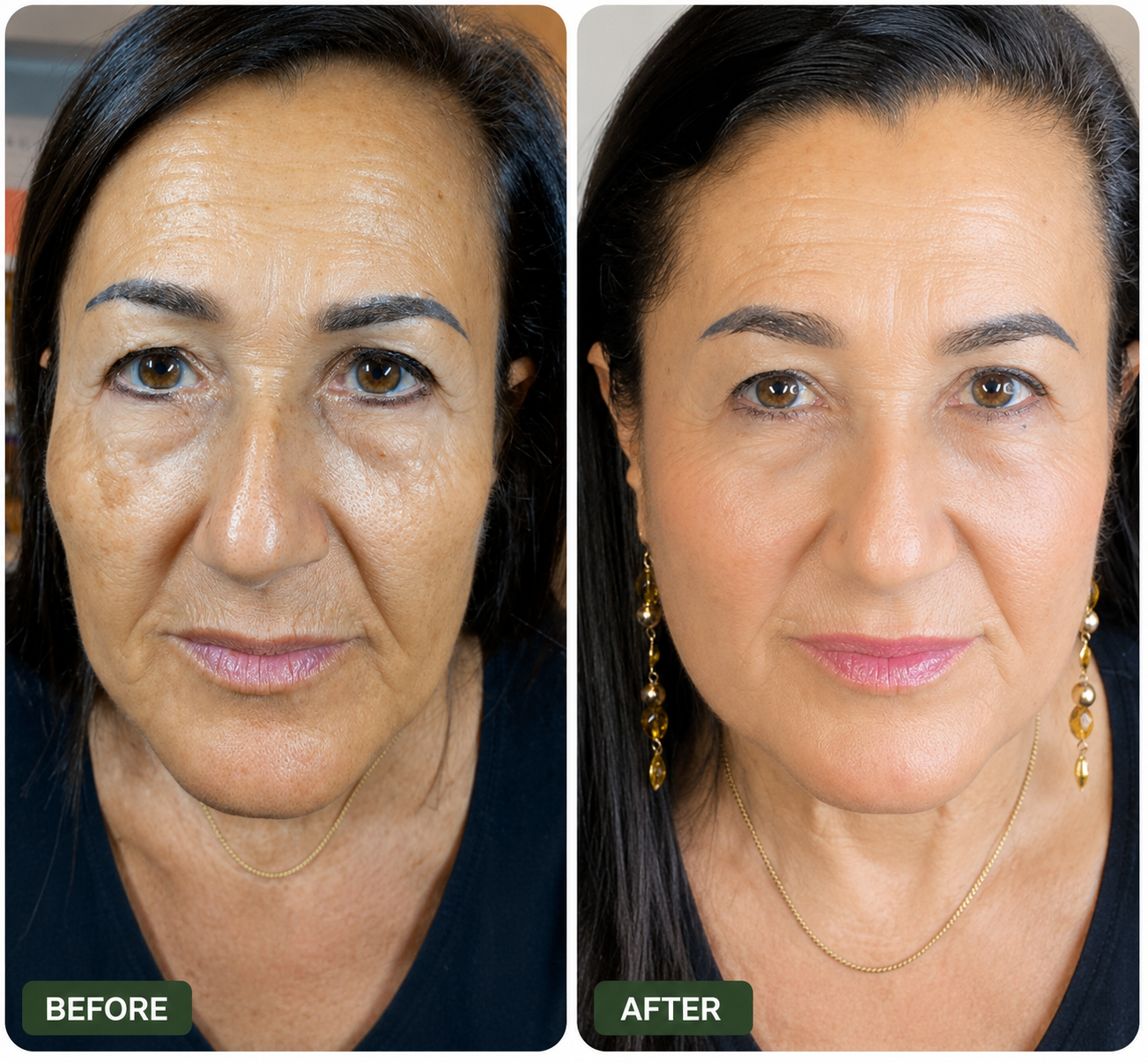
Choosing a facial rejuvenation treatment is a personal decision, and understanding recovery is just as important as understanding the treatment itself. If you are researching facelift treatment, you may be comparing traditional surgery with modern options that aim to lift, firm, and redefine the face without an operation.
A surgical facelift can address significant sagging by repositioning underlying tissues and removing or redistributing excess skin. However, it also involves incisions, swelling, bruising, activity restrictions, and a recovery period. Modern aesthetic medicine now offers alternatives for people who want visible refinement with little or no downtime.
At JMED Clinic Dubai, the focus is on personalised, non-surgical facial rejuvenation. Treatments such as Face Sculpting Technique and Perfect Shape Face + Neck are designed to support facial definition, skin firmness, circulation, and a refreshed appearance without traditional facelift surgery. JMED Clinic describes Face Sculpting as a non-invasive medical-aesthetic treatment using specialised manual techniques, while Perfect Shape Face + Neck combines RF, vacuum therapy, micro-stimulation and PDT light.
how long does facelift recovery take?
For a traditional surgical facelift, the most noticeable swelling and bruising are generally concentrated in the first several days. Many people become socially presentable within approximately 10–14 days, although residual swelling, tightness, numbness and tissue changes can continue for weeks or months. Final refinement can take several months, so recovery should be planned around your surgeon’s instructions rather than a fixed calendar.
First, what does a facelift actually do?
A traditional facelift, medically known as rhytidectomy, is a surgical procedure designed to improve visible signs of ageing in the face and neck.
It is different from a facial or a surface-level skin treatment because surgery can address deeper supporting tissues.
Depending on the technique and the patient’s needs, a facelift may address:
- Sagging cheeks
- Jowling along the jawline
- Loose facial skin
- Certain areas of neck laxity
- Loss of definition around the lower face
- Deeper folds associated with facial ageing
The exact surgical approach varies between patients. Incisions are generally positioned around natural contours of the ears and/or hairline, and the surgeon may reposition underlying tissues before closing the incisions.
This is why choosing a qualified and appropriately trained surgeon is essential if you are considering surgical facelift treatment in Dubai.
Searching for the Best facelift surgeon in Dubai should not simply mean choosing the person with the highest number of reviews or the most impressive before-and-after photographs. Look for appropriate qualifications, relevant surgical experience, transparent consultation, realistic communication and a clear understanding of your individual anatomy.
Why does facelift recovery take time?
The face may look relatively small compared with other parts of the body, but facial surgery involves delicate skin, connective tissue, blood vessels and nerves.
After surgery, the body needs time to repair and reorganise these tissues.
Swelling and bruising are normal parts of this healing process. The American Society of Plastic Surgeons notes that swelling and bruising are expected after facelift surgery and that postoperative care should be tailored to the individual procedure and surgeon’s instructions.
Recovery can also vary according to:
- The type of facelift performed
- Whether a neck lift or another procedure was combined with it
- Individual healing response
- Age and general health
- Skin quality
- Surgical technique
- Postoperative care
- Activity level
- Smoking and other lifestyle factors
This is why two people undergoing apparently similar procedures may experience noticeably different recovery timelines.
Your facelift recovery timeline: what to expect
Think of recovery as a series of stages rather than a single event.
Days 1–3: The immediate healing phase
The first few days are generally when patients need the most rest and support.
You may experience:
- Swelling
- Bruising
- Tightness
- Mild to moderate discomfort
- Temporary numbness
- Tiredness
- Limited facial movement
- Sensitivity around the surgical areas
A dressing or bandage may be used to minimise swelling and bruising, and some patients may temporarily have drains to remove excess blood or fluid.
Your first postoperative appointment is usually an important checkpoint.
Your surgeon will assess the healing areas, review medication and aftercare, and advise you about activity and wound care.
Do not judge your Facelift before and after result at this stage.
The face is still swollen, and the early appearance does not represent the final outcome.
Days 3–7: Swelling may peak before improving
According to the American Society of Plastic Surgeons, swelling and bruising commonly reach their height around days three and four before gradually improving.
This can be psychologically challenging.
You may look different from what you expected and wonder whether something has gone wrong.
In many cases, however, early swelling is simply part of the healing process.
Rest, prescribed medication, appropriate sleeping positioning and following your surgeon’s instructions become particularly important during this stage.
Avoid adding products, massage techniques or devices that have not been approved by your surgical team.
Week 2: Looking more like yourself
By the second week, many patients begin to feel considerably more comfortable.
Bruising is usually less obvious, swelling starts to settle and everyday movement becomes easier.
Some people may return to work during this period, depending on their profession, healing and surgeon’s advice.
The ASPS notes that by the end of the second week, many people are feeling more like themselves and can begin light activities such as walking.
However, “feeling better” does not mean that healing is complete.
You may still experience:
- Residual swelling
- Tightness
- Numbness
- Tingling
- Sensitivity
- Mild asymmetry caused by uneven swelling
These symptoms should be discussed with your surgical team if you are concerned.
Weeks 3–4: Early visible refinement
This is when the face can begin to look substantially more refined.
Swelling continues to decrease, facial contours become easier to appreciate and incision areas begin to mature.
The ASPS notes that during weeks three and four, residual swelling and tightness can remain, while patients generally begin to see clearer improvements in facial contour.
This is often the stage when people start feeling excited about their result.
Still, patience remains important.
Your face is continuing to heal beneath the surface even if the external appearance already looks much better.
One month and beyond
At approximately one month, many patients have resumed most normal activities, subject to their surgeon’s approval.
But subtle healing continues.
The ASPS explains that minor swelling, bruising, tightness or numbness can sometimes persist for considerably longer, even when these changes are barely noticeable to anyone other than the patient.
For some individuals, the face can continue refining for several months.
Therefore, comparing photographs too frequently can create unnecessary anxiety.
When will you see the final facelift result?
One of the most common questions is: How long does it take to see the final result after facelift treatment?
The answer is different for every patient.
Many people can appear socially presentable within 10–14 days, but the face may still feel different for several months. According to ASPS, it can take around two to three months for the face to feel closer to normal in terms of texture, sensation and tightness.
Final refinement depends on how quickly:
- Swelling resolves.
- Tissues settle.
- Sensation normalises.
- Incisions mature.
- Skin adapts to its new contours.
A successful facelift is therefore not something that should be evaluated only a week or two after surgery.
What should you do before facelift treatment?
Good recovery begins before the procedure.
Your consultation should cover your medical history, medications, lifestyle, skin condition, expectations and desired outcome.
Build realistic expectations
A facelift can improve signs of ageing, but it does not stop the natural ageing process.
The goal should be rejuvenation rather than trying to recreate your appearance from decades earlier.
Understand the recovery period
If you have an important event coming up, discuss the date with your surgeon before scheduling surgery.
Do not assume that two weeks automatically means you will look completely healed.
Some people recover faster, while others experience longer-lasting swelling or bruising.
Arrange support
Having someone available to help during the first stage of recovery can make the experience easier.
The ASPS recommends arranging support for the first night following surgery, including transportation home and assistance if needed.
Prepare your environment
Before surgery, arrange:
- Comfortable clothing
- Easy-to-prepare meals
- Prescribed medication
- A suitable sleeping arrangement
- Time away from demanding work
- Transportation for follow-up appointments
Small preparations can make recovery significantly less stressful.
The recovery mistakes that can affect your experience
Even when surgery goes well, poor aftercare can make recovery more difficult.
Returning to strenuous exercise too early
Exercise increases physical demand on the body and should only be resumed according to your surgeon’s instructions.
Ignoring postoperative appointments
Follow-up visits allow your surgeon to assess healing and identify concerns early.
Applying unapproved products
Your skin and incision areas are healing. Avoid experimenting with strong skincare products, devices or active ingredients unless your clinical team approves them.
Sleeping incorrectly
Your surgeon may recommend a specific sleeping position to help protect healing tissues and minimise swelling.
Expecting instant symmetry
Temporary asymmetry can occur while swelling settles.
Do not assume that every small difference represents a permanent problem.
Smoking
Smoking can interfere with healing and increase surgical complications. Your surgeon should provide specific instructions regarding smoking before and after surgery.
What does a good facelift recovery look like?
There is no single “perfect” recovery.
However, gradual improvement is generally more reassuring than deterioration.
You should expect the overall direction to move from:
Swelling → settling → refinement → maturation
Rather than:
Surgery → immediate final result
Your surgeon should explain which symptoms are expected and which require urgent attention.
If you develop significant or worsening pain, rapidly increasing swelling, bleeding, fever, signs of infection, breathing difficulties or another concerning symptom, contact your surgical team promptly or seek appropriate medical care.
Facelift surgery vs non-surgical facial lifting
Not everyone who wants a facelift appearance actually needs or wants surgery.
This is where modern aesthetic treatments become relevant.
A facelift non surgical approach is generally aimed at improving selected concerns such as skin laxity, facial definition, puffiness, muscle tension or skin quality without surgical incisions.
However, it is important to understand the difference.
Surgical facelift
A surgical facelift can reposition deeper tissues and remove excess skin.
It is therefore appropriate for some patients with significant structural laxity.
Non-surgical facial rejuvenation
Non-surgical treatments generally focus on improving:
- Skin firmness
- Collagen support
- Facial contours
- Puffiness
- Circulation
- Muscle tension
- Skin texture
They do not reproduce every structural effect of surgery.
For patients searching for facelift treatment without surgery, the appropriate choice depends on the degree of laxity and the patient’s goals.
Can you get a facelift without surgery?
For selected concerns, yes—but the terminology matters.
A facelift treatment without surgery does not literally perform a surgical facelift.
Instead, non-invasive or minimally invasive aesthetic treatments may create a lifting, tightening or contour-enhancing effect.
At JMED Clinic, two treatments are particularly relevant for people looking for a non-surgical approach.
Face Sculpting Technique: a natural approach to facial definition
JMED Clinic describes its Face Sculpting Technique as a non-invasive medical-aesthetic treatment designed to sculpt, lift and rejuvenate the face through specialised manual techniques.
The treatment focuses on facial muscles, circulation, lymphatic drainage and relaxation rather than injections or surgery.
This makes it particularly interesting for people whose concerns include:
- Facial puffiness
- Tension around the jaw
- A tired-looking face
- Reduced facial definition
- Fluid retention
- Desire for a natural-looking refresh
The technique is designed to work with the face rather than dramatically change it.
The goal is refined definition and a fresher appearance.
What makes Face Sculpting different?
Rather than relying on surgery, the technique combines hands-on facial work with an understanding of facial muscles and tissue movement.
JMED Clinic positions it as a treatment that can stimulate circulation, support lymphatic drainage and relax facial muscles.
For clients who want a subtle, natural aesthetic change, this can be a valuable alternative to immediately considering surgery.
Perfect Shape Face + Neck: advanced non-surgical contouring
For patients primarily concerned with facial and neck laxity, JMED Clinic also offers Perfect Shape Face + Neck.
The clinic describes this as a luxury non-invasive treatment from Milan, Italy.
Its technology combines:
- Radiofrequency
- Vacuum therapy
- Micro-stimulation
- PDT light using red and blue wavelengths
The treatment is designed to support collagen stimulation, circulation, reduction of puffiness and facial contour refinement without surgery or downtime.
This makes it particularly relevant for individuals searching for Non surgical face lift Dubai options.
It is not a surgical facelift replacement for everyone.
Instead, it offers a non-invasive pathway for people whose primary goals are firmer-looking skin, improved definition and facial rejuvenation.
Which option is right for you?
Rather than asking, “Which treatment is the best?” a better question is:
“Which treatment matches my level of ageing and my goals?”
Consider this framework:
| Concern | Possible approach |
| Mild facial puffiness | Face Sculpting Technique |
| Facial tension | Face Sculpting Technique |
| Desire for natural facial definition | Face Sculpting Technique |
| Mild-to-moderate skin laxity | Perfect Shape Face + Neck |
| Neck and jawline refinement | Perfect Shape Face + Neck |
| Significant skin sagging | Surgical consultation may be more appropriate |
| Desire for no surgical downtime | Non-invasive options |
| Need for substantial tissue repositioning | Surgical facelift |
A consultation is essential because skin laxity can have multiple causes.
Facelift before and after: how to evaluate results properly
When researching Facelift before and after photographs, look beyond the headline transformation.
Ask:
- Was the lighting similar?
- Is the patient’s head position comparable?
- How much time passed between images?
- Was another procedure performed?
- Is the image heavily edited?
- Does the result look natural?
- Does the patient’s anatomy resemble yours?
Before-and-after photography is useful, but it should support—not replace—a professional consultation.
The same principle applies to non-surgical treatment results.
A realistic result is one that improves your individual concerns while maintaining facial harmony.
Common myths about facelift recovery
Myth 1: “I will look normal after one week.”
Fact: Some people improve rapidly, but one week is usually still early in recovery. Swelling and bruising can remain visible.
Myth 2: “The final result is visible immediately.”
Fact: Early swelling can obscure the actual result. Facial contours become clearer as swelling subsides.
Myth 3: “Non-surgical facelift means exactly the same as surgery.”
Fact: Non-surgical treatments can improve selected signs of ageing, but they do not replicate the tissue repositioning possible with surgery.
Myth 4: “More aggressive treatment always means better results.”
Fact: The most appropriate treatment is the one matched to your anatomy, skin quality, concerns and tolerance for downtime.
Myth 5: “A facelift stops ageing.”
Fact: A facelift rejuvenates existing signs of ageing, but natural ageing continues afterward.
Expert tips for maintaining facial rejuvenation
Once healing is complete, long-term skin care becomes important.
Protect your skin from the sun
Daily sun protection helps protect skin quality and supports the longevity of aesthetic results.
Maintain a consistent skincare routine
Choose products according to your skin type rather than following every trending routine.
Prioritise overall health
Adequate sleep, balanced nutrition, hydration and avoiding smoking all contribute to healthier skin.
Avoid aggressive self-treatment
Do not use intensive facial devices or treatments without understanding whether they are appropriate for your skin and healing stage.
Follow professional recommendations
Your aesthetic plan should evolve as your skin changes.
Why choose JMED Clinic for non-surgical facial rejuvenation?
For clients who are not ready for surgery—or who simply prefer a non-surgical approach—JMED Clinic offers a treatment philosophy focused on personalised facial rejuvenation.
The clinic’s current face-treatment portfolio includes Face Sculpting Technique, Perfect Shape Face + Neck, Lumi-Lift Glow, BB Glow Radiance, Forever Young, Luxe Micro-Needling Therapy, Hydrafacial treatments, Thervex RF Pro Micro Needling Treatments, and other advanced skin technologies. This range allows treatment planning to be based on the actual skin concern rather than recommending the same procedure for every client.
A personalised approach
Facial ageing is rarely just one concern.
One person may primarily have puffiness or loss of facial definition. Another may have skin laxity, fine lines or sagging around the jawline and neck. Someone else may be more concerned about acne scars, enlarged pores, uneven texture or pigmentation.
A personalised assessment can help determine whether one treatment or a combination of treatments is more appropriate for the individual’s skin concerns and goals.
Non-invasive and minimally invasive options
JMED Clinic provides a range of options for clients seeking facial rejuvenation without traditional surgery.
Face Sculpting focuses on manual facial techniques, while Perfect Shape Face + Neck combines technologies including RF, vacuum therapy, micro-stimulation and PDT light.
For clients concerned with skin laxity, texture, fine lines or signs of ageing, Thervex RF Pro Micro Needling Treatments offer another technology-based option. The treatment combines precision microneedling with controlled radiofrequency energy to support collagen and elastin stimulation and skin renewal. It is designed to address concerns including acne scars, enlarged pores, fine lines, wrinkles, uneven texture and skin laxity.
Advanced RF technology
Thervex RF Pro Micro Needling Treatments include different approaches depending on the skin concern.
RF Fractional Collagen Regeneration Therapy combines precision microneedles with controlled RF energy to support collagen regeneration and skin remodelling, making it suitable for concerns such as acne scars, enlarged pores, uneven texture, fine lines, wrinkles and mild skin laxity.
Thermagical RF Collagen Lift Therapy uses controlled radiofrequency energy to support collagen contraction and renewal. It is designed for concerns such as sagging skin, jawline definition and non-surgical lifting and firming.
Italian-inspired technology
Perfect Shape Face + Neck is described by JMED Clinic as a luxury non-invasive treatment from Milano, Italy, combining several technologies within one treatment concept.
A natural aesthetic philosophy
The objective is not to make the face look frozen or dramatically altered.
For many clients, the desired result is simply:
Firmer. Fresher. More defined. More rested. Still you.
About Grand Master Jurgita Jasiunaite
Grand Master Jurgita Jasiunaite is presented by JMED Clinic as a key figure behind its specialised aesthetic and skin-regeneration approach.
Her work is associated with advanced skin regeneration and personalised aesthetic protocols, including the JMED Stria Repair Method™.
This philosophy is particularly relevant to modern aesthetics, where clients increasingly want treatments that respect their natural appearance rather than create an obviously “treated” look.
Whether the concern is skin texture, body rejuvenation, facial ageing or stretch marks, the emphasis is on understanding the condition first and selecting the most appropriate treatment strategy.
For clients considering a non-surgical alternative to facelift treatment, this personalised philosophy can be particularly valuable.
How should you decide between surgery and non-surgical treatment?
Start with three questions.
1. How much laxity do I actually have?
Mild laxity may respond well to non-surgical approaches.
Significant excess skin may require surgical assessment.
2. How much downtime am I willing to accept?
Traditional facelift surgery requires a meaningful healing period.
Non-surgical options generally offer much less interruption to daily life, although downtime varies by treatment.
3. What result am I expecting?
If you want a subtle refresh and improved definition, a non-surgical approach may be appropriate.
If you want significant repositioning of sagging facial tissues, surgery may be more suitable.
The right decision is not about choosing the most aggressive treatment.
It is about choosing the treatment that fits your anatomy, goals, expectations and lifestyle.
Final thoughts: recovery is part of the result
Facelift treatment can provide significant facial rejuvenation, but the recovery process should never be treated as an afterthought.
The first few days are focused on healing.
The following weeks are about swelling reduction and returning to normal activity.
The following months allow the face to settle and the final result to emerge.
For people who want to avoid surgical recovery altogether, modern non-surgical facial treatments can provide another route to facial refinement. At JMED Clinic, Face Sculpting Technique and Perfect Shape Face + Neck offer different approaches to lifting, defining and rejuvenating the face without traditional facelift surgery.
Book your consultation at JMED Clinic to discuss your facial concerns and discover which approach is appropriate for you.
Experience advanced facial rejuvenation with a personalised treatment plan designed around your natural features.
How long does facelift recovery take?
−Most patients experience the most noticeable swelling and bruising during the first several days. Many become socially presentable within approximately 10–14 days, but residual swelling, tightness and altered sensation can continue for weeks or months. Your individual recovery depends on the surgical technique, healing response and postoperative care.
When can I return to work after facelift treatment?
+Some people return to work around two weeks, particularly if their job is not physically demanding. However, timing varies significantly depending on bruising, swelling, the type of surgery and your surgeon's advice. If your work is public-facing, you may prefer additional recovery time for a more comfortable and confident appearance.
When will I see my final facelift result?
+You will see progressive improvement as swelling decreases, but the final result does not appear immediately. The ASPS notes that the face may take around two to three months to feel closer to normal, while subtle swelling and tissue changes can take longer to resolve.
Is facelift treatment painful?
+Some discomfort, tightness and sensitivity are expected after surgery. Your surgeon will provide appropriate pain-management and aftercare instructions. The amount of discomfort varies according to the procedure and individual healing response. If pain becomes severe or unexpectedly worsens, contact your surgical team promptly.
Can I get a facelift without surgery?
+You can achieve certain lifting, firming and contouring goals without surgery, but non-surgical treatment is not the same as a surgical facelift. JMED Clinic offers treatments such as Face Sculpting Technique and Perfect Shape Face + Neck for clients seeking non-invasive facial rejuvenation.
What is a non-surgical facelift?
+A non-surgical facelift is a general term for aesthetic treatments intended to improve facial firmness, definition, skin quality or the appearance of ageing without traditional facelift surgery. The exact technology varies between clinics. Results are generally more subtle than surgical tissue repositioning and depend on the individual's starting condition.
What is Face Sculpting Technique?
+JMED Clinic describes Face Sculpting Technique as a non-invasive medical-aesthetic treatment using specialised manual techniques to sculpt, lift and rejuvenate the face. It focuses on facial muscles, circulation, lymphatic drainage and relaxation and does not use Botox or injections.
What is Perfect Shape Face + Neck?
+Perfect Shape Face + Neck is a non-invasive facial and neck treatment offered by JMED Clinic. According to the clinic, it combines radiofrequency, vacuum therapy, micro-stimulation and PDT light to support collagen stimulation, circulation, reduce puffiness and improve facial contours without surgery or downtime.
Is non-surgical facelift suitable for everyone?
+Not necessarily. Suitability depends on your age, skin quality, degree of laxity, facial structure, medical history and desired outcome. Someone with significant excess skin may require a surgical consultation, while someone with mild laxity or puffiness may be more suitable for non-invasive treatment.
How long do facelift results last?
+Surgical facelift results can last for years, but the face continues to age naturally. Lifestyle, genetics, sun exposure and skin health influence longevity. Maintaining sun protection, healthy habits and an appropriate skincare routine can help support the quality of your skin over time.
What should I avoid after facelift surgery?
+Your surgeon will provide personalised restrictions, but patients are generally advised to avoid strenuous activity and anything that places unnecessary pressure or friction on healing areas until cleared. Avoid experimenting with facial treatments or products without professional approval during the recovery period.
When can I exercise after a facelift?
+Exercise should be resumed gradually and only when your surgeon confirms that it is appropriate. Light movement may be introduced earlier than strenuous exercise, but the exact timeline depends on the procedure and your healing. Your surgeon's instructions should always take priority over generic online timelines.
Will my facelift scars be visible?
+Facelift incisions are generally positioned in areas designed to make them less noticeable, such as natural contours around the ears or hairline. However, scar appearance varies from person to person. Proper wound care and following your surgeon's instructions are important for scar maturation.
What should I look for when choosing the best facelift surgeon in Dubai?
+Look beyond marketing claims. Consider the surgeon's qualifications, experience with facelift procedures, consultation process, surgical facility, before-and-after results, approach to safety and willingness to explain risks and recovery. A good consultation should leave you informed rather than pressured into treatment.
Should I choose surgery or a treatment at JMED Clinic?
+That depends on your concerns and expectations. Surgical facelift procedures are designed to address significant structural laxity, while JMED's non-invasive facial treatments focus on concerns such as facial definition, puffiness, skin firmness and rejuvenation. A professional consultation can help determine which approach better matches your goals.