How to Treat Different Types of Stretch Marks: A Complete Guide to Advanced Stretch Marks Treatment
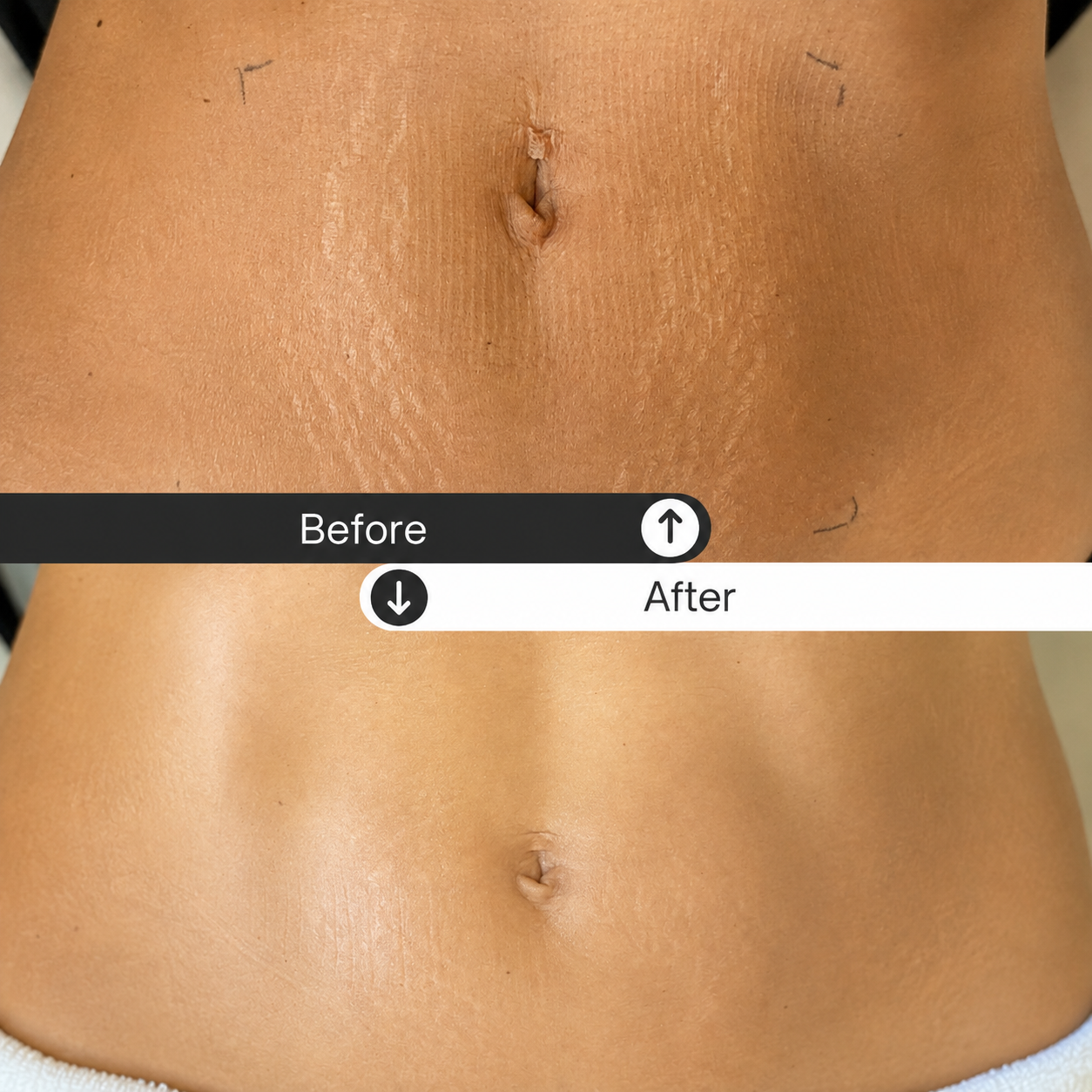
An clinical and aesthetic guide to understanding, fading, and repairing dermal tearing across all skin types, body locations, and life stages.
Introduction
Stretch marks are among the most common skin concerns worldwide, affecting up to 90% of individuals at some point in their lives. Whether they appear as vibrant red stretch marks on thighs during adolescence, purple bands across the hips, or fine silver lines following weight changes or pregnancy, these dermal striations often carry an emotional burden. Many individuals wonder: Why do I have stretch marks when I’m skinny? or Is bio oil good for stretch marks?
Understanding the physiological mechanics behind stretch marks is the first step toward effective restoration. While traditional lore often suggests that topical creams can magically erase deep scars, modern medical aesthetics demonstrates that true repair requires targeted dermal remodeling. Seeking an effective stretch marks treatment involves distinguishing between superficial topical hydrators and clinically proven cellular regeneration methods.
Whether you are dealing with fresh puberty stretch marks, muscle stretch marks from intensive gym training, or long-standing silver striae, this guide breaks down every aspect of stretch mark formation, prevention, popular topical remedies, and state-of-the-art clinical solutions.
How Do You Effectively Treat Stretch Marks?
Effective stretch marks treatment depends entirely on the age and depth of the mark. Fresh red or purple stretch marks respond well to vascular lasers, early microneedling, and topical retinoids. Mature white or silver stretch marks require advanced dermal regeneration methods—such as the proprietary JMED Stria Repair Method—to rebuild lost collagen, restore skin texture, and trigger cellular repair deep within the dermis.
What Are Stretch Marks and How Do They Form?
Stretch marks, known medically as striae distensae, are a form of dermal scarring. They occur when the body undergoes rapid expanding or shrinking, causing the structural framework of the skin to tear.
To understand stretch marks, one must look at the skin’s layers:
- Epidermis: The outermost protective layer of the skin.
- Dermis: The middle layer contains dense networks of collagen and elastin fibers, which give the skin its firmness and elasticity.
- Subcutaneous Layer: The deeper fatty tissue layer.
When the dermis is stretched too quickly, the elastic fibers rupture. As the tissue attempts to heal itself, microscopic tears form beneath the surface. Blood vessels become visible through these fresh tears, giving early stretch marks their characteristic red, pink, or purple color (striae rubrae). Over time, as blood vessels contract, the torn tissue transitions into hypopigmented, narrow linear scars known as mature white stretch marks (striae albae).
Causes & Triggers: Why Do Stretch Marks Appear?
Stretch marks are frequently associated solely with rapid weight gain or pregnancy. However, the biological mechanisms driving dermal tears are far more complex and encompass hormonal fluctuations, genetic structural fragility, and rapid skeletal growth.
1. Stretch Marks on Thighs, Hips, and Lower Body
It is exceedingly common to discover stretch marks on thighs, hips, and buttocks. The thigh region contains high concentrations of subcutaneous fat and large muscle groups that experience significant expansion during growth spurts, hormonal shifts, or lower-body workouts.
Many people ask, why do I have stretch marks on my thighs or why are there stretch marks on my thighs when my body weight remains stable? The answer often lies in localized tissue expansion during adolescent development or fluid fluctuations driven by estrogen and cortisol.
- Stretch marks on inner thighs: The skin along the inner thigh is particularly delicate and thin. Friction from walking paired with rapid tissue expansion causes inner thigh stretch marks that appear as fine, vertical or horizontal bands.
- Stretch marks on upper thighs and buttocks: Hormonal redistribution of tissue often deposits fat rapidly in these areas during puberty or hormonal fluctuations, leading to red stretch marks on thighs or purple stretch marks on inner thighs.
2. Why Do Skinny People Get Stretch Marks?
A frequent misconception is that stretch marks only affect individuals who are overweight. Questions like why do I have stretch marks on my bum when I’m skinny?, why do I have stretch marks on my hips and I’m skinny?, or why do I have stretch marks on my back when I’m skinny? arise from this misunderstanding.
Can skinny people get stretch marks? Absolutely. Skinny people with stretch marks develop them primarily due to:
- Rapid Skeletal Growth: During puberty, bones grow faster than the overlying dermal matrix can stretch, resulting in horizontal stretch mark like lines on legs, lower back, or hips.
- Hormonal Spikes: Cortisol, the stress hormone, weakens structural collagen fibers. High natural cortisol levels cause the skin to tear easily under minimal tension, explaining why someone who is skinny with stretch marks may develop deep striae.
- Genetic Elastin Deficiencies: Genetic predisposition plays a primary role. If your family history includes low collagen elasticity, you can develop striae even at a very low body fat percentage.
3. Puberty & Teen Stretch Marks
During adolescent growth spurts, stretch marks in teenagers are a natural biological response. Known as puberty stretch marks or teen stretch marks, these lines commonly appear across the knees, outer thighs, hips, and lower back. Parents and teenagers frequently ask: do teenage stretch marks go away? While stretch marks during puberty fade naturally over 12 to 24 months, complete natural removal rarely occurs without clinical intervention.
4. Muscle Stretch Marks in Men and Athletes
Stretch marks men experience are frequently tied to intense resistance training or athletic development. Rapid hypertrophy—especially in the upper body—causes stretch marks on biceps, chest muscles, and shoulders. These muscle stretch marks indicate that muscle volume expanded faster than the skin’s dermal matrix could adapt. In weightlifting circles, athletes often debate whether stretch marks from lifting good or bad; while aesthetically unwanted, biologically they simply signal rapid muscular growth.
5. Can Scratching Cause Stretch Marks?
A widely circulated myth asserts that itching or scratching itchy skin causes dermal tears. Concerns like does scratching cause stretch marks, can scratching cause stretch marks, or does scratching cause stretch marks during pregnancy stem from the sensation of itching that precedes their appearance.
The Medical Truth: Scratching does not create stretch marks. Stretch marks form deep within the dermal layer due to mechanical tension and internal collagen rupture. However, as the dermis tears beneath the surface, histamine is released, creating an intense itching sensation (pruritus). Therefore, itching is a symptom of forming stretch marks, not the cause. However, physical scratching can damage the epidermal surface, cause hyperpigmentation, or trigger inflammation, making does scratching make stretch marks worse a clear yes in terms of superficial skin health.
The Stages and Types of Stretch Marks
Identifying the stage of your stretch marks dictates the optimal stretch mark treatment protocol.
| Stage 1: Striae Rubrae | Stage 2: Striae Albae |
|---|---|
| – Fresh / Early Phase | – Mature / Chronic Phase |
| – Red, Pink, or Purple | – White, Silver, or Depressed |
| – High Vascularity & Inflammation | – Loss of Pigment & Collagen Strands |
| – High Responsiveness to Treatment | – Requires Deep Dermal Regeneration |
| – Fresh / Early Phase | – Mature / Chronic Phase |
Fresh Stretch Marks (Striae Rubrae)
Fresh stretch marks appear bright red, pink, or deep purple. The coloration stems from active inflammation and visible blood vessels exposed by newly ruptured dermal collagen. Because the tissue remains vascularized and dynamic, red stretch marks on thighs and body areas are easiest to treat. Early treatment during this phase yields the highest rate of complete aesthetic recovery.
Mature Stretch Marks (Striae Albae)
Over months or years, blood vessels contract, inflammation subsides, and the torn tissue undergoes atrophy. The resulting white stretch marks or silver lines appear slightly indented or textured. Because vascular activity has ceased, mature striae resist superficial treatments and require deep collagen-inducing technologies to restructure the skin.
Evaluating Popular Topical Remedies: Does Bio-Oil Really Work?
Among home remedies, Bio-Oil is widely referenced. Patients constantly ask: does bio oil help with stretch marks?, does bio oil work on stretch marks?, can bio oil remove stretch marks?, and is bio oil good for stretch marks?
To answer these questions accurately, we must examine clinical realities vs. marketing claims:
- What Bio-Oil Can Do: Bio-Oil contains vitamin A, vitamin E, plant extracts (such as chamomile, lavender, and rosemary), and a mineral oil base. It functions as an effective epidermal emollient. Regular application improves skin hydration, smooths surface dryness, supports skin barrier function, and may help soften fresh stretch marks by keeping the tissue supple.
- What Bio-Oil Cannot Do: Can bio oil remove stretch marks entirely? No. Dermal tears occur deep beneath the epidermis. No topical oil or over-the-counter cream can penetrate deep into the dermis to re-stitch torn collagen fibers or fill depressed white striae.
- Does Bio Oil Work on Old Stretch Marks? Clinical evidence shows minimal structural change when applying oil to mature, silver striae. While bio oil before and after stretch marks photos may show mild skin tone blending due to surface hydration, it does not achieve true stretch mark removal.
Comparison: At-Home Care vs. Clinical Treatments
| Feature / Treatment | Topical Oils & Creams (e.g., Bio-Oil) | Traditional Lasers / Microneedling | Advanced Dermal Repair (JMED Stria Repair Method™) |
|---|---|---|---|
| Depth of Action | Epidermis (Surface only) | Mid-Dermis | Deep Dermal Collagen Matrix |
| Target Stretch Mark Type | Fresh, early red marks (Hydration only) | Fresh to moderate white marks | All types (Red, Purple, Deep White/Silver) |
| Downtime | None | 3 to 7 days (Redness, peeling) | Minimal to none |
| Collagen Regeneration | Negligible | Moderate | Maximum / Structural Restoration |
| Primary Limitation | Cannot fix structural dermal tears | Risk of hyperpigmentation in darker skin | Requires specialized expert administration |
Advanced Professional Stretch Marks Treatment Solutions
When seeking significant visible improvement, professional clinical treatments provide the depth and intensity required to rebuild broken dermal
1. Vascular & Fractional Lasers
Lasers operate by delivering targeted light energy into the skin. Pulsed Dye Lasers (PDL) target hemoglobin in purple stretch marks on inner thighs or red striae, reducing redness. Fractional CO2 lasers create micro-thermal zones in the tissue to stimulate collagen, though they carry risks of post-inflammatory hyperpigmentation on darker skin tones and require noticeable downtime.
2. Radiofrequency (RF) Microneedling
Combining physical micro-punctures with heat energy, RF microneedling triggers a wound-healing cascade in the dermis. While helpful for skin tightening, multiple sessions are typically needed, and results vary significantly based on individual skin elasticity and scar depth.
3. The Gold Standard: The JMED Stria Repair Method™ at JMED Clinic
For those seeking a specialized, non-invasive to minimally invasive approach with consistent structural outcomes, JMED Clinic offers the revolutionary JMED Stria Repair Method.
Developed through Italian aesthetic innovation, the JMED Stria Repair Method™ rejects harsh abrasive techniques in favor of precise, cellular skin regeneration. Rather than creating widespread thermal damage, this method targets the exact linear path of each stretch mark.
Key Principles of the JMED Stria Repair Method™:
- Targeted Dermal Activation: Activates dormant fibroblasts within the torn dermal walls without damaging surrounding healthy tissue.
- Biomimetic Collagen Synthesis: Triggers the body’s natural production of Type I and Type III collagen, filling depressed white striae from within.
- Melanocyte Restimulation: Helps restore natural pigmentation to hypopigmented white lines, blending the scar into adjacent skin.
- Customized Skin Precision: Tailored to address specific zones, including sensitive inner thigh stretch marks, male thigh stretch marks, and post-pregnancy abdominal marks.
For patients seeking elite stretch marks treatment in dubai, JMED Clinic provides an ultra-luxury, results-driven standard of care that addresses both new and mature striae effectively.
Authority Spotlight: Grand Master Jurgita Jasiunaite
The success of JMED Clinic’s advanced protocols is rooted in the expertise of its founder, Grand Master Jurgita Jasiunaite.
An international authority in skin regeneration and aesthetic reconstruction, Grand Master Jurgita Jasiunaite brought Italian aesthetic innovation to the forefront of non-surgical cosmetic dermatology. Having spent years studying dermal repair mechanics and micro-tissue behavior, she created the JMED Stria Repair Method™ to overcome the limitations of traditional lasers and topical creams.
Her approach combines artistic precision with biological science, ensuring that every patient receives a customized treatment plan optimized for their skin type, age, and stretch mark depth. Under her leadership, JMED Clinic has become a premier destination for high-profile clients, celebrities, and discerning individuals seeking world-class stretch mark removal in dubai.
Common Myths vs. Facts About Stretch Marks
- Myth 1: Stretch marks mean you are out of shape or gaining excess weight.
- Fact: Skinny individuals, elite athletes, weightlifters, and teenagers during puberty frequently get stretch marks due to rapid growth, muscle development, and cortisol fluctuations.
- Myth 2: Scratching directly causes stretch marks.
- Fact: Scratching affects the epidermis; stretch marks are internal dermal tears. Itching is merely a symptom of tearing dermal fibers releasing histamines.
- Myth 3: Over-the-counter creams can permanently erase stretch marks.
- Fact: Topical creams only hydrate the superficial layer. True structural repair requires professional dermal intervention like the JMED Stria Repair Method™.
- Myth 4: Stretch marks are 100% permanent and impossible to improve.
- Fact: While total erasure down to the single cellular level is realistic only in fresh cases, advanced treatments can improve mature stretch mark depth, texture, and color by 70% to 90%+.
Step-by-Step Guide: How to Approach Your Stretch Mark Repair Journey
If you are struggling with stretch marks on upper thighs, hips, biceps, or abdomen, follow this structured roadmap:
- Assess the Color and Stage: Determine if your marks are red/purple (fresh) or white/silver (mature).
- Optimize Home Care: Keep the skin hydrated with lipid-rich emollients to maintain superficial suppleness and prevent epidermal cracking. Avoid aggressive scratching.
- Consult a Clinical Expert: Avoid spending excessive time and funds on unproven topical oils. Schedule a professional consultation at a specialized clinic such as JMED Clinic.
- Undergo Customized Dermal Regeneration: Treat the area using targeted cellular repair protocols like the JMED Stria Repair Method™ for dramatic, long-lasting texture improvement.
- Maintain Skin Elasticity: Support your clinical results by maintaining balanced hydration, adequate protein intake, and protecting treated areas from prolonged UV exposure.
Conclusion: Reclaim Smooth, Restored Skin
Stretch marks are a natural part of human growth, development, and bodily changes. However, if they impact your confidence, you do not have to accept them as permanent fixtures. From understanding why skinny people get stretch marks to choosing between topicals and clinical interventions, informed decisions lead to clear results.
While over-the-counter products like Bio-Oil provide surface-level hydration, true structural restoration requires advanced aesthetic science. Under the visionary direction of Grand Master Jurgita Jasiunaite, JMED Clinic offers unmatched precision through the proprietary JMED Stria Repair Method™.
Take the definitive step toward smoother, radiant skin. Book your consultation at JMED Clinic today and experience the future of advanced skin regeneration.
Can stretch marks go away naturally without treatment?
−Do stretch marks go away completely on their own? Fresh red or purple stretch marks usually fade over 1 to 2 years into lighter silver lines. However, because dermal collagen fibers have torn internally, the texture and indentation rarely disappear entirely without clinical treatment.
How long does it take for stretch marks to fade?
+Natural fading from red to white typically takes between 6 to 18 months. With advanced professional treatment like the JMED Stria Repair Method™, visible improvements in texture, depth, and color can often be seen within 4 to 8 weeks.
Are stretch marks permanent?
+Without clinical treatment, mature white stretch marks are generally permanent scars. However, modern regenerative aesthetics can restructure the damaged tissue, reducing their visibility by up to 80-90% and making them virtually unnoticeable.
Does Bio-Oil help with stretch marks on thighs?
+Bio-Oil provides surface hydration and softens the outer skin layer, which can ease tightness and improve overall skin texture. However, it cannot repair torn collagen fibers deep within the dermis or eliminate mature white thigh stretch marks.
Why do I have stretch marks on my inner thighs if I am skinny?
+Skinny individuals often develop inner thigh stretch marks due to rapid adolescent growth spurts, sudden hormonal shifts that alter collagen synthesis, or genetic skin fragility rather than fat gain.
How do celebrities get rid of stretch marks after pregnancy?
+Celebrities rely on advanced clinical treatments rather than standard retail creams. They commonly undergo specialized dermal regeneration protocols, laser therapies, and custom clinical treatments like those provided at JMED Clinic to restore post-pregnancy skin firmness.
What is the difference between red and white stretch marks?
+Red stretch marks (striae rubrae) are fresh, inflamed tears with active blood flow, making them highly responsive to early treatment. White stretch marks (striae albae) are older, non-vascularized scars that require deep collagen-inducing regenerative therapies.
Does scratching make stretch marks worse?
+Yes. While scratching does not create dermal tears below, aggressive scratching damages the surface epidermis, exacerbates localized skin inflammation, and can lead to dark post-inflammatory hyperpigmentation over the marks.
Why do men get stretch marks on their biceps and back?
+Men frequently develop stretch marks on biceps, shoulders, and back due to rapid muscle hypertrophy during weightlifting, rapid skeletal growth during teenage years, or high levels of circulating cortisol weakening dermal elasticity.
How much does stretch mark removal in Dubai cost?
+The stretch mark removal dubai price varies based on the total treatment area, severity of the striae, and the specific technology utilized. Customized regenerative treatments like the JMED Stria Repair Method™ are priced following a personalized clinical assessment.
Can I prevent stretch marks during puberty or workouts?
+While genetics dictate much of your susceptibility, maintaining optimal skin hydration, consuming a diet rich in Vitamin C and zinc, avoiding extreme rapid weight fluctuations, and introducing gradual progression in weightlifting can lower risk.
Why is the JMED Stria Repair Method™ superior to standard lasers?
+Unlike traditional lasers that rely on broad thermal energy—which carries downtime and hyperpigmentation risks—the JMED Stria Repair Method™ utilizes targeted Italian micro-regeneration to precisely rebuild collagen fibers along the individual scar path with minimal recovery time.