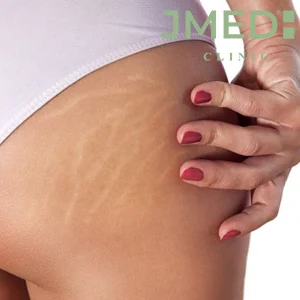

Stretch marks are one of the most common skin concerns affecting both women and men of all ages. Whether they appear after pregnancy, puberty, rapid weight gain, bodybuilding, or hormonal changes, many people wonder what are stretch marks, why stretch marks occur, and whether they can actually be treated.
Although stretch marks are medically harmless, they often affect self-confidence because they alter the skin’s texture and appearance. Today, thanks to advancements in regenerative aesthetic medicine, there are far more effective solutions than simply relying on creams or home remedies.
At JMED Clinic Dubai, we believe that understanding the stretch marks definition, their causes, and how they progress is the first step toward choosing the right treatment. Rather than masking the problem, modern regenerative techniques focus on restoring healthier skin from within.
Whether you’ve recently noticed red lines on your stomach, white streaks on your thighs, or you’re simply searching for what is stretch marks in body, this comprehensive guide explains everything you need to know—from how stretch marks develop to the latest professional treatments available.
Stretch marks (also called striae) are a type of scar that develops when the skin stretches or shrinks rapidly, causing collagen and elastin fibers to tear beneath the surface. They commonly appear during pregnancy, puberty, rapid weight changes, or muscle growth. While they usually fade over time, professional regenerative treatments can significantly improve their appearance.
Stretch Marks at a Glance
| Feature | Details |
| Medical Name | Striae Distensae |
| Stretch Marks Meaning | A form of dermal scarring caused by rapid skin stretching |
| Common Areas | Abdomen, thighs, hips, breasts, buttocks, arms, lower back |
| Early Appearance | Red, pink, purple, or dark streaks |
| Older Appearance | White or silvery lines |
| Painful? | Usually no |
| Dangerous? | No |
| Can They Fade? | Yes, with professional regenerative treatments |
| Best Professional Solution | JMED Stria Repair Method™ |
What Are Stretch Marks?
Many people search online for what are stretch marks?, stretch marks meaning, define stretch marks, or what is a stretch mark because they suddenly notice unusual lines appearing on their skin.
Simply put, stretch marks are a type of scar that forms when the skin expands or contracts faster than it can naturally adapt.
Your skin contains two important structural proteins:
- Collagen
- Elastin
These proteins keep the skin firm, flexible, and resilient.
When the skin stretches too quickly, these supportive fibers begin to tear beneath the surface. As the skin heals, visible streaks appear. These streaks are what we commonly call stretch marks.
The stretch marks definition in dermatology refers to long, narrow bands of scar tissue that develop within the dermis—the middle layer of the skin.
Unlike superficial scratches or pigmentation, stretch marks originate much deeper within the skin, which explains why ordinary creams rarely produce dramatic improvements.
Stretch Marks Meaning: What Do They Actually Indicate?
Many people ask:
- What does stretch mark mean on the body?
- What do stretch marks mean?
- Meaning of stretch marks on the body
The answer is surprisingly simple.
Stretch marks usually indicate that your body has experienced rapid physical changes.
These changes may include:
- Pregnancy
- Puberty
- Sudden weight gain
- Weight loss
- Rapid muscle growth
- Hormonal fluctuations
- Certain medical conditions
In most cases, stretch marks are completely normal and are not a sign of disease.
Instead, they represent the skin’s natural response to being stretched beyond its normal capacity.
What Is Stretch Marks in Body?
If you’ve searched what is stretch marks in body, think of your skin as a strong elastic fabric.
When stretched slowly, it adapts well.
When stretched too quickly, tiny tears develop within the deeper collagen network.
The body repairs these tears with scar tissue rather than rebuilding the original collagen structure.
That is why stretch marks have a different:
- Texture
- Colour
- Elasticity
- Appearance
compared with the surrounding skin.
Stretch Marks vs Normal Skin
| Normal Skin | Stretch Mark Skin |
| Rich in collagen | Collagen fibres disrupted |
| Flexible | Reduced elasticity |
| Smooth texture | Slightly indented or raised |
| Even colour | Red, purple, pink or white streaks |
| Strong dermal support | Scar-like connective tissue |
Stretch Marks Types
Not every stretch mark looks the same.
Different stretch marks types develop depending on how old they are and what caused them.
Understanding the type of stretch marks helps practitioners choose the most appropriate treatment protocol.
1. Red Stretch Marks (Striae Rubrae)
These are newly formed stretch marks.
They usually appear:
- Pink
- Red
- Purple
- Reddish-brown (on darker skin tones)
Because blood vessels remain active beneath the skin, these marks respond exceptionally well to early regenerative treatment.
Many people searching what do stretch marks look like at first are actually describing this stage.
2. White Stretch Marks (Striae Albae)
Over time, blood vessels shrink and inflammation reduces.
The marks gradually become:
- White
- Silver
- Pale
- Slightly shiny
White stretch marks are older and often require more advanced regenerative therapies because collagen loss has already occurred.
3. Deep Stretch Marks
Some individuals develop wider or deeper scars due to significant skin stretching.
These may appear after:
- Pregnancy
- Major weight changes
- Bodybuilding
- Growth spurts
Professional assessment helps determine the most suitable regenerative approach.
Stretch Mark Stages
Many people search:
- stretch marks stages
- stretch mark stages
- stages of stretch marks
- stretch mark progression
Stretch marks generally develop through four distinct stages.
| Stage | Appearance | Skin Activity |
| Stage 1 | Pink or red lines | Active inflammation |
| Stage 2 | Purple or dark streaks | Collagen fibres continue breaking |
| Stage 3 | Fading pink lines | Healing begins |
| Stage 4 | White or silver scars | Mature stretch marks |
Early treatment during the first two stages often produces the most noticeable improvement because collagen regeneration is easier to stimulate.
What Do Stretch Marks Look Like When They First Appear?
One of the most common online searches is:
- What do stretch marks look like when they first appear?
- What do stretch marks start out looking like?
- Start of stretch marks look like
- What does the beginning of a stretch mark look like?
Early stretch marks usually appear as:
- Thin reddish lines
- Pink streaks
- Purple bands
- Slightly raised marks
- Mild itching in some individuals
They are often easier to notice under bright lighting because the skin texture changes before the colour becomes obvious.
Over several months, these early marks gradually flatten and fade into lighter white or silver lines if left untreated.
Understanding these early signs allows patients to seek professional advice sooner, improving the likelihood of achieving visible skin regeneration with advanced treatments.
Why Do Stretch Marks Occur?
One of the most frequently searched questions online is “why stretch marks occur” or “why do stretch marks occur?“ The answer lies in how your skin responds to rapid physical changes.
Your skin is made up of three primary layers. The middle layer, known as the dermis, contains collagen and elastin fibers that allow the skin to stretch and return to its original shape. When the body grows or changes faster than these fibers can adapt, microscopic tears develop within the dermis. As the skin heals, scar tissue forms, creating what we know as stretch marks.
In simple terms, stretch marks are not caused by poor skincare or lack of hydration—they are the result of structural changes occurring beneath the skin’s surface.
How Do Stretch Marks Occur?
If you’ve ever wondered how do stretch marks occur, imagine stretching an elastic band beyond its limit. Eventually, tiny fibers begin to weaken and break. A similar process happens inside your skin.
Normally, collagen and elastin keep your skin smooth, firm, and flexible. However, when the skin stretches too quickly, these fibers cannot keep up. The body responds by producing scar tissue instead of rebuilding the original collagen network, leaving visible streaks behind.
This is why professional treatments focus on stimulating collagen regeneration rather than simply treating the skin’s surface.
Common Causes of Stretch Marks
There isn’t one single reason why stretch marks develop. Instead, several factors can contribute to their appearance.
1. Pregnancy
Pregnancy is one of the most common reasons for stretch marks. As the abdomen expands to accommodate the growing baby, the skin stretches rapidly. Hormonal changes during pregnancy also reduce collagen production, making the skin more susceptible to tearing.
Stretch marks commonly appear on:
- Abdomen
- Breasts
- Hips
- Thighs
Early skincare and professional guidance may help improve skin elasticity during and after pregnancy.
2. Rapid Weight Gain
When body weight increases quickly, the skin must stretch to accommodate the additional fat tissue. If this happens faster than collagen fibers can adapt, stretch marks develop.
People often notice them on:
- Stomach
- Waist
- Arms
- Hips
- Buttocks
- Thighs
3. Rapid Weight Loss
Many people assume stretch marks only appear after gaining weight. In reality, significant weight loss can also reveal existing stretch marks that were previously hidden beneath stretched skin.
Following major weight loss, older white stretch marks often become more noticeable due to changes in skin tension.
4. Puberty
Teenagers frequently experience growth spurts during puberty, causing bones, muscles, and skin to develop at different rates.
This explains why many adolescents develop stretch marks on:
- Thighs
- Hips
- Lower back
- Buttocks
- Shoulders
These marks are completely normal and affect both boys and girls.
5. Bodybuilding & Muscle Growth
Rapid muscle gain places significant stress on the skin.
This is why bodybuilders often notice stretch marks on:
- Chest
- Shoulders
- Upper arms
- Back
These marks occur because muscle mass increases faster than the skin can comfortably stretch.
6. Hormonal Changes
Hormones play a much bigger role than many people realize.
Increased levels of cortisol reduce collagen production and weaken the skin’s supportive fibers.
Hormonal fluctuations commonly occur during:
- Pregnancy
- Puberty
- Menopause
- Certain medical conditions
- Long-term corticosteroid use
7. Genetics
Genetics strongly influence whether you’ll develop stretch marks.
If your parents experienced significant stretch marks, your chances of developing them are higher because skin elasticity is largely inherited.
Who Is More Likely to Develop Stretch Marks?
Anyone can develop stretch marks, but some people are naturally more prone than others.
You may have a higher risk if you:
- Experience rapid weight changes
- Are pregnant
- Go through puberty
- Build muscle quickly
- Have a family history of stretch marks
- Use corticosteroid medications for long periods
- Have naturally less elastic skin
Stretch marks affect both women and men equally, although the location may differ depending on body composition and lifestyle.
Where Do Stretch Marks Commonly Appear?
Stretch marks usually develop in areas where the skin experiences the greatest amount of stretching.
| Body Area | Common Cause |
| Stomach | Pregnancy, weight gain |
| Thighs | Puberty, weight changes, muscle growth |
| Hips | Growth spurts, pregnancy |
| Buttocks | Weight gain |
| Breasts | Pregnancy, hormonal changes |
| Arms | Muscle growth |
| Lower Back | Puberty |
| Shoulders | Bodybuilding |
These areas naturally store more fat or experience greater mechanical tension, making them more susceptible to collagen damage.
Can Men Get Stretch Marks?
Absolutely.
Although stretch marks are often associated with pregnancy, men develop them just as frequently.
Male stretch marks commonly appear after:
- Rapid muscle gain
- Intense strength training
- Weight gain
- Puberty
- Growth spurts
Typical locations include:
- Shoulders
- Upper arms
- Chest
- Lower back
- Stomach
- Thighs
Modern regenerative treatments can be tailored to both male and female skin types.
Are Stretch Marks Dangerous?
One of the biggest misconceptions is that stretch marks indicate an underlying illness.
In most cases, they do not.
Stretch marks are considered a cosmetic skin concern rather than a medical disease.
However, if stretch marks appear suddenly without any obvious reason or are accompanied by other symptoms such as unexplained weight changes or hormonal issues, it is advisable to seek professional medical evaluation.
Can Stretch Marks Be Prevented?
Although complete prevention isn’t always possible—especially when genetics or hormonal changes are involved—you can reduce your risk by supporting your skin’s health.
Some helpful habits include:
- Maintaining a stable body weight
- Eating a protein-rich diet
- Staying well hydrated
- Exercising regularly
- Moisturizing the skin daily
- Avoiding smoking
- Protecting the skin from excessive sun exposure
Healthy collagen production starts from within, making overall lifestyle an important factor in maintaining resilient skin.
Common Myths vs Facts About Stretch Marks
| Myth | Fact |
| Stretch marks only affect women. | Men develop stretch marks too, especially during puberty and bodybuilding. |
| Only overweight people get stretch marks. | Even slim individuals can develop stretch marks due to growth spurts or genetics. |
| Stretch marks disappear on their own. | They may fade over time but rarely disappear completely without treatment. |
| Expensive creams remove stretch marks. | Most creams improve hydration but cannot repair deep collagen damage. |
| Stretch marks are unhealthy. | Stretch marks are harmless and do not affect physical health. |
| Surgery is the only solution. | Modern regenerative and minimally invasive treatments can significantly improve their appearance without surgery. |
Why Early Treatment Matters
Many people wait years before seeking treatment because they believe stretch marks cannot be improved.
In reality, the earlier treatment begins, the better the results often are.
Fresh red or purple stretch marks still have active blood vessels and ongoing collagen remodeling. This makes them more responsive to regenerative therapies that stimulate natural skin repair.
Older white stretch marks can also be treated successfully, but they generally require a more comprehensive and personalized approach because collagen loss has already stabilized.
At JMED Clinic Dubai, every treatment plan begins with a detailed skin assessment to determine the age, depth, colour, and severity of the stretch marks. This allows specialists to recommend the most effective regenerative protocol rather than using a one-size-fits-all approach.
By treating stretch marks early, patients often achieve smoother skin texture, improved elasticity, and a more even skin tone while helping prevent the marks from becoming more noticeable over time.
Best Stretch Mark Treatments: What Really Works?
One of the most common questions people ask is:
- Can stretch marks be removed?
- What is the best stretch mark treatment?
- Do creams really work?
The truth is that stretch marks are a form of dermal scarring. Because the damage occurs deep within the skin, no cream or home remedy can completely repair the broken collagen and elastin fibers.
Modern aesthetic medicine focuses on skin regeneration rather than simply hiding the marks. The goal is to rebuild healthier skin from within, improve collagen production, restore elasticity, and reduce the visibility of stretch marks over time.
Today, several professional treatments are available, but not all deliver the same level of results.
At-Home Remedies vs Professional Stretch Mark Treatment
Many people begin with home remedies before seeking professional care. While these methods may improve skin hydration, they cannot repair structural damage within the dermis.
| At-Home Care | Professional Regenerative Treatments |
| Moisturises the skin | Stimulates collagen and elastin production |
| Improves skin softness | Repairs deeper skin layers |
| Helps maintain skin barrier | Improves texture and elasticity |
| Suitable for prevention | Suitable for treating existing stretch marks |
| Results are usually limited | Visible long-term improvement possible |
Home care remains valuable, especially when combined with professional treatments, but realistic expectations are important.
Common Professional Treatments for Stretch Marks
Several technologies are commonly used to improve the appearance of stretch marks.
Laser Therapy
Laser treatments stimulate collagen production while helping improve skin colour and texture.
They are commonly recommended for:
- Red stretch marks
- White stretch marks
- Mild to moderate scarring
Although laser therapy can improve appearance, results vary depending on skin type, the age of the stretch marks, and the technology used.
Microneedling
Microneedling creates controlled micro-injuries that trigger the body’s natural healing response.
Benefits include:
- Increased collagen production
- Improved skin texture
- Better absorption of regenerative products
- Gradual improvement in scar appearance
Multiple treatment sessions are usually required.
Radiofrequency Skin Regeneration
Radiofrequency delivers controlled heat into deeper skin layers.
This helps:
- Stimulate fibroblasts
- Increase collagen production
- Improve skin firmness
- Enhance elasticity
Many modern regenerative protocols combine radiofrequency with other technologies for enhanced results.
Combination Regenerative Treatments
Rather than relying on a single procedure, many advanced clinics now combine multiple technologies into one personalized treatment plan.
This approach addresses:
- Collagen regeneration
- Skin tightening
- Tissue remodeling
- Improved circulation
- Enhanced healing
Combination protocols generally deliver more comprehensive improvements than standalone treatments.
Introducing the JMED Stria Repair Method™
At JMED Clinic Dubai, stretch mark treatment goes beyond traditional cosmetic procedures.
The JMED Stria Repair Method™ is an exclusive regenerative protocol developed specifically for stretch-mark-affected skin. Instead of treating only the visible surface, it focuses on rebuilding the skin’s internal structure using advanced Italian regenerative science.
Unlike conventional treatments that rely on a single device or product, this method combines multiple regenerative components working together to stimulate healthier collagen production and improve skin quality from within.
The protocol was created by Grand Master Jurgita Jasiunaite, an internationally recognized Italian Skin Regeneration Expert, following years of research into advanced skin regeneration.
How the JMED Stria Repair Method™ Works
The JMED Stria Repair Method™ is not a single treatment.
It is a carefully designed multi-step regenerative protocol where each stage supports the next for optimal results.
Step 1 – Precision Needling Technology
The first stage uses advanced precision needling techniques that focus directly on each stretch mark rather than the surrounding healthy skin.
This process helps:
- Stimulate natural collagen production
- Activate fibroblasts
- Encourage dermal repair
- Improve skin texture
- Support healthier tissue regeneration
Because treatment is highly targeted, it works precisely where collagen loss has occurred.
Step 2 – Advanced Italian Cosmeceuticals
During treatment, specially formulated professional cosmeceuticals are applied to the skin.
These formulations contain carefully selected regenerative ingredients designed to support:
- Cellular renewal
- Collagen synthesis
- Elastin production
- Skin hydration
- Tissue repair
Unlike standard skincare products, these professional formulations are developed specifically for clinical regenerative treatments.
Step 3 – FillerX Triple Energy Technology
Approximately two weeks later, the regeneration process continues with FillerX Triple Energy Technology.
This advanced system combines:
- Radiofrequency
- Photobiomodulation
- Neuromodulation
Together, these technologies stimulate deeper tissue activity while supporting continued skin regeneration.
Benefits include:
- Enhanced collagen remodeling
- Improved circulation
- Increased tissue oxygenation
- Better skin firmness
- Improved elasticity
- Healthier skin texture
Step 4 – Home Regeneration Protocol
Skin regeneration continues long after the clinical session ends.
Patients follow a personalized home-care program using the exclusive JMED Stria Repair Line™, developed to maintain collagen activity between treatments.
This helps:
- Extend treatment benefits
- Support ongoing regeneration
- Improve skin hydration
- Maintain healthier skin structure
Why the JMED Stria Repair Method™ Is Different
Many stretch mark treatments focus only on improving colour or surface appearance.
The JMED Stria Repair Method™ addresses the deeper biological processes responsible for skin regeneration.
Traditional Treatments
- Often rely on one technology
- Focus mainly on appearance
- Limited regenerative support
JMED Stria Repair Method™
✔ Multi-step regenerative protocol
✔ Precision targeted treatment
✔ Italian regenerative science
✔ Professional cosmeceuticals
✔ Advanced energy technology
✔ Personalized treatment plans
✔ Supports collagen and elastin regeneration
✔ Suitable for multiple skin types
Rather than masking stretch marks, the goal is to restore healthier, stronger skin over time.
What Results Can Patients Expect?
Every patient’s skin is unique, so results vary depending on:
- Age of the stretch marks
- Colour
- Skin type
- Depth
- Location
- Overall skin health
Many patients begin noticing improvements after the first treatment cycle.
As collagen continues to regenerate naturally over the following weeks and months, patients often experience:
- Smoother skin texture
- Better elasticity
- Improved skin firmness
- Reduced visibility of stretch marks
- More even skin tone
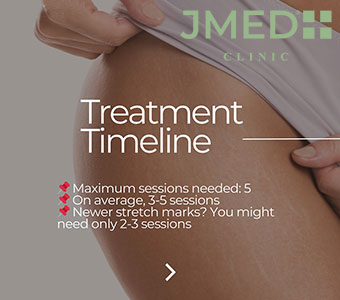
Most personalized treatment plans involve three to five treatment cycles, although this varies according to individual needs.
Why Choose JMED Clinic Dubai?
Choosing the right clinic is just as important as choosing the right treatment.
At JMED Clinic Dubai, every treatment is designed around one philosophy:
True skin regeneration rather than temporary cosmetic correction.
Patients choose JMED Clinic because of its commitment to advanced regenerative medicine, personalized care, and Italian innovation.
What Makes JMED Clinic Different?
✔ Advanced Italian regenerative protocols
✔ Non-invasive and minimally invasive treatments
✔ Personalized treatment planning
✔ Exclusive JMED Stria Repair Method™
✔ Premium Italian professional cosmeceuticals
✔ Latest regenerative technologies
✔ Luxury patient experience
✔ Evidence-based treatment approach
Rather than applying identical treatments to every patient, specialists carefully evaluate each individual’s skin before developing a customized regenerative plan.
This personalized approach helps maximize both safety and treatment outcomes.
Experience Advanced Skin Regeneration
Whether your stretch marks developed during pregnancy, puberty, weight changes, or muscle growth, professional regenerative treatment can help improve their appearance.
At JMED Clinic Dubai, every consultation begins with a detailed skin assessment to determine the most suitable treatment strategy for your skin type, stretch mark stage, and aesthetic goals.
If you’re looking for a science-backed approach to skin regeneration rather than temporary cosmetic improvement, the JMED Stria Repair Method™ offers a comprehensive solution designed specifically for stretch-mark-affected skin.
About Grand Master Jurgita Jasiunaite
Behind every advanced regenerative treatment at JMED Clinic Dubai is the expertise and vision of Grand Master Jurgita Jasiunaite, an internationally recognised Italian Skin Regeneration Expert, educator, skincare innovator, and the creator of the exclusive JMED Stria Repair Method™.
With decades of experience in regenerative aesthetics, Grand Master Jurgita has dedicated her career to developing scientifically advanced protocols that go beyond temporary cosmetic improvements. Her philosophy focuses on restoring the skin’s natural structure through collagen stimulation, tissue regeneration, and personalised treatment planning.
She is also the founder of JMED Clinic Dubai, J Academy International, and the creator of premium Jurgita Cosmeceuticals™, which are formulated and manufactured in Italy using advanced biomedical research.
Today, doctors, dermatologists, and aesthetic practitioners from around the world learn her regenerative techniques through international conferences and professional training programs.
Patients from across the UAE, GCC, and Europe visit JMED Clinic to experience the original JMED Stria Repair Method™, performed according to the highest standards of Italian regenerative medicine.
Expert Tips to Help Minimise Stretch Marks
Although stretch marks cannot always be prevented, healthy skin habits can reduce your risk and improve treatment outcomes.
✔ Maintain a Stable Weight
Frequent weight gain and weight loss place repeated stress on collagen fibres, increasing the likelihood of developing stretch marks.
✔ Stay Hydrated
Well-hydrated skin maintains better elasticity and supports healthier skin function.
✔ Eat a Collagen-Supporting Diet
Foods rich in:
- Vitamin C
- Protein
- Zinc
- Healthy fats
- Antioxidants
help support natural collagen production.
✔ Exercise Regularly
Good circulation delivers oxygen and nutrients to the skin while supporting overall tissue health.
✔ Moisturise Daily
Although moisturisers cannot remove stretch marks, they help maintain the skin barrier and reduce dryness.
✔ Avoid Smoking
Smoking damages collagen, reduces circulation, and slows the skin’s natural healing process.
✔ Seek Early Professional Advice
Fresh red stretch marks often respond better to regenerative treatment than mature white stretch marks.
Timeline: What Results Can You Expect?
Every person’s skin heals differently, but understanding the treatment timeline helps set realistic expectations.
| Timeline | What to Expect |
| Consultation | Skin assessment and personalised treatment plan |
| First Treatment | Collagen stimulation begins |
| 2–4 Weeks | Skin healing and early improvement in texture |
| After Multiple Sessions | Progressive improvement in colour, elasticity, and visibility |
| Long-Term | Continued collagen remodelling and healthier-looking skin |
Patience is essential because collagen regeneration is a gradual biological process. Most patients notice continued improvement for several months following treatment.
Can Stretch Marks Go Away Completely?
One of the most common questions people ask is whether stretch marks can disappear forever.
The answer is that stretch marks are a form of scar tissue, so complete removal cannot be guaranteed.
However, advanced regenerative treatments can significantly:
- Reduce visibility
- Improve skin texture
- Enhance elasticity
- Stimulate collagen production
- Create smoother, healthier-looking skin
The earlier treatment begins, the greater the potential for visible improvement.
Why More Patients Choose JMED Clinic Dubai
Patients choose JMED Clinic Dubai because the clinic combines advanced Italian regenerative science with personalised aesthetic care.
Instead of offering generic treatments, every protocol is customised based on:
- Stretch mark age
- Skin type
- Skin condition
- Treatment area
- Individual goals
The clinic combines:
- Advanced regenerative technologies
- Precision treatment protocols
- Professional Italian cosmeceuticals
- Luxury patient care
- Evidence-based skin regeneration
This comprehensive approach helps deliver natural-looking improvements while supporting healthier skin from within.
Conclusion
Stretch marks are a completely natural part of life and affect millions of people worldwide. Whether they develop during pregnancy, puberty, weight changes, muscle growth, or hormonal fluctuations, they represent structural changes within the skin rather than a medical condition.
Understanding what are stretch marks, why they occur, and how they progress allows you to make informed decisions about treatment. While home remedies and moisturisers may help support healthy skin, professional regenerative treatments offer the greatest opportunity for visible improvement by stimulating collagen and elastin production where it matters most.
At JMED Clinic Dubai, our goal is not simply to improve how stretch marks look—it is to support genuine skin regeneration using advanced Italian technology, personalised treatment plans, and the exclusive JMED Stria Repair Method™.
If you’re ready to improve your skin’s texture, restore confidence, and experience a regenerative approach to stretch mark treatment, book your consultation at JMED Clinic Dubai today and discover a personalised solution designed specifically for your skin.
What are stretch marks?
−Stretch marks, also known as striae, are a type of scar that develops when the skin stretches or shrinks rapidly, causing collagen and elastin fibres beneath the skin to break.
Why do stretch marks occur?
+Stretch marks commonly occur due to rapid skin stretching caused by pregnancy, puberty, weight gain or loss, bodybuilding, hormonal changes, or genetic factors.
What do stretch marks look like when they first appear?
+Fresh stretch marks usually appear as pink, red, purple, or darker streaks on the skin. As they mature, they gradually fade into white or silvery lines.
Can stretch marks disappear naturally?
+Stretch marks may become less noticeable over time, but they rarely disappear completely without professional treatment that stimulates skin regeneration.
Are stretch marks permanent?
+Stretch marks are permanent scars. However, advanced regenerative treatments can significantly reduce their visibility while improving skin texture, elasticity, and overall appearance.
Are stretch marks dangerous?
+No. Stretch marks are harmless and are considered a cosmetic concern rather than a medical condition. They do not affect your overall health.
Can men develop stretch marks?
+Yes. Men frequently develop stretch marks during puberty, rapid muscle growth, bodybuilding, weight gain, or significant changes in body composition.
What is the best treatment for stretch marks?
+The best treatment depends on the age and severity of your stretch marks. Regenerative protocols such as the JMED Stria Repair Method™ are designed to stimulate collagen production and improve skin quality.
Can white stretch marks be treated?
+Yes. Although white stretch marks are older and more challenging to treat than newer red marks, advanced regenerative therapies can still improve their texture, colour, and appearance.
How many treatment sessions are needed?
+Most patients require between three and five treatment cycles, depending on the size, location, depth, and condition of their stretch marks.
Is stretch mark treatment painful?
+Most modern regenerative treatments are minimally invasive and involve only mild, temporary discomfort. Your practitioner will ensure the procedure is as comfortable as possible.
How long does it take to see results?
+Many patients notice visible improvements after the first treatment cycle, with continued collagen regeneration and skin improvement over the following weeks and months.
Why choose JMED Clinic Dubai?
+JMED Clinic combines advanced Italian regenerative technology, personalised treatment plans, premium professional cosmeceuticals, and the expertise of Grand Master Jurgita Jasiunaite to deliver exceptional stretch mark regeneration results.
Can stretch marks be prevented?
+Although stretch marks cannot always be prevented, maintaining a healthy weight, staying hydrated, eating a balanced diet, and following a good skincare routine may help reduce the risk.
Is a consultation necessary before treatment?
+Yes. A professional consultation allows your specialist to assess your skin, identify the type and severity of your stretch marks, and create a personalised treatment plan for the best possible results.