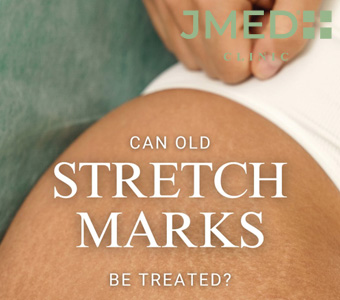
Bio-Oil= Moisturizer. Not a Stretch Mark Treatment
Bio-Oil is one of the most frequently searched products when people want to improve the appearance of stretch marks. Searches such as “can Bio-Oil remove stretch marks,” “does Bio-Oil get rid of stretch marks,” “does Bio-Oil actually work,” and “what does Bio-Oil do for stretch marks” reflect a common question: can applying an oil to the skin really make stretch marks disappear?
The short answer is no—not in the way many people expect.
Bio-Oil can be useful as a skincare product because oils and moisturising ingredients can help reduce dryness and leave the skin feeling softer and smoother. However, that is different from actually treating the structural changes responsible for stretch marks.
Stretch marks, medically known as striae distensae, develop when the skin stretches or changes rapidly. This can occur during pregnancy, puberty, significant weight changes, rapid muscle growth and other situations where the skin is placed under considerable stretching. The dermal collagen and elastin network is affected, which is why established stretch marks cannot simply be moisturised away.
So, if you have been wondering “does Bio-Oil work on stretch marks?”, it is important to distinguish between moisturising the skin and regenerating stretch-mark-affected skin.
Can Bio-Oil Remove Stretch Marks?
Bio-Oil should not be considered a proven stretch mark removal treatment.
If by “remove” you mean making established stretch marks completely disappear, there is no good evidence that simply applying Bio-Oil can accomplish that.
The same applies to questions such as:
- Does Bio-Oil remove stretch marks?
- Will Bio-Oil get rid of stretch marks?
- Can Bio-Oil get rid of stretch marks?
- Does Bio-Oil clear stretch marks?
- Can Bio-Oil remove old stretch marks?
- Does Bio-Oil actually help with stretch marks?
- Will Bio-Oil remove stretch marks permanently?
The answer is essentially the same: Bio-Oil may moisturise the skin and temporarily improve how the surface feels and looks, but that does not mean it has removed the stretch mark.
The American Academy of Dermatology explains that stretch marks are a type of scar created when skin stretches or shrinks quickly and the collagen and elastin supporting the skin are disrupted. Treatments can make them less noticeable, but stretch marks are considered permanent scars.
This distinction is particularly important when evaluating online claims about a “stretch mark oil” or “stretch mark removal oil.”
Does Bio-Oil Help Stretch Marks?
This is where the answer needs some nuance.
If your question is “does Bio-Oil help with stretch marks?”, it can help in a skincare sense by keeping the skin moisturised and reducing dryness. Massage and hydration can also make skin feel softer and more supple.
But moisturised skin should not be confused with regenerated skin.
A stretch mark involves changes within the dermis—the deeper layer of the skin where collagen and elastin provide structure and elasticity. Applying an oil to the surface does not automatically reverse those structural changes.
Research into topical treatments for stretch marks has generally found limited and inconsistent evidence. A systematic review concluded that there was not enough evidence to identify a topical formulation as the most effective option for eliminating or improving stretch marks.
The American Academy of Dermatology also notes that popular home remedies such as almond oil, cocoa butter, olive oil and vitamin E have not been shown to fade stretch marks in studies.
So, what does Bio-Oil do for stretch marks?
It may:
- moisturise dry skin;
- make the skin feel smoother;
- temporarily improve the appearance of dry or flaky skin;
- support a regular skincare and massage routine.
It should not be viewed as a treatment that:
- rebuilds damaged collagen;
- restores damaged elastin;
- removes established stretch marks;
- permanently tightens loose skin;
- guarantees removal of white stretch marks.
How Does Bio-Oil Work on Stretch Marks?
A common search is “how does Bio-Oil work for stretch marks?”
The easiest way to understand this is to separate surface hydration from stretch mark regeneration.
When you apply an oil-based skincare product, it can help reduce water loss from the skin and leave the surface feeling softer. This can temporarily make uneven areas appear smoother.
However, the visible line of a stretch mark is associated with changes in the deeper skin structure.
Think of it this way:
|
What you want to improve |
What moisturising oil can do |
What professional treatment may target |
|
Dryness |
✓ Helps moisturise |
✓ |
|
Rough skin texture |
May temporarily improve feel |
✓ |
|
Surface softness |
✓ |
✓ |
|
Stretch-mark depth |
Not reliably |
May improve appearance |
|
Collagen structure |
Not established for Bio-Oil |
Some procedures stimulate collagen |
|
Elastin changes |
Not established for Bio-Oil |
Some professional treatments target skin regeneration |
|
Established white stretch marks |
Not proven to remove |
May become less noticeable |
|
Loose/saggy skin |
Moisturisation does not tighten it |
Certain treatments may improve firmness |
This is why Bio-Oil and stretch marks should not automatically be treated as synonymous.
Does Bio-Oil Work on Old Stretch Marks?
If you have old, white or silver stretch marks, you may specifically be searching:
- Does Bio-Oil work on old stretch marks?
- Does Bio-Oil help old stretch marks?
- Does Bio-Oil help with white stretch marks?
- Is Bio-Oil good for old stretch marks?
- Can Bio-Oil remove old stretch marks?
- Does Bio-Oil really work on old stretch marks?
Unfortunately, old stretch marks are usually more difficult to improve with topical products.
As stretch marks mature, their colour generally becomes lighter and the skin can develop a slightly depressed or wrinkled appearance. The AAD notes that mature stretch marks generally respond less to topical products than newer ones.
That does not mean old stretch marks cannot be improved.
It means that if your goal is significant improvement, it may be more appropriate to discuss professional treatment options with a qualified skin specialist rather than relying exclusively on an over-the-counter oil.
Does Bio-Oil Help White Stretch Marks?
White stretch marks are generally referred to as striae alba.
They are mature stretch marks that have lost much of their original red, pink or purple colour.
At this stage, people often become frustrated because moisturisers and oils appear to do very little.
The reason is straightforward: hydration and structural repair are not the same thing.
A moisturiser can make the surrounding skin feel softer. It cannot guarantee that an established white stretch mark will disappear.
The Australian College of Dermatologists similarly notes that white stretch marks can be difficult to treat and that treatments such as lasers and skin needling may provide improvement, while oils and vitamin E have not been scientifically proven to reduce stretch marks.
Does Bio-Oil Tighten Loose or Saggy Skin?
Another common misconception is that if an oil makes skin feel smooth and supple, it must also tighten loose skin.
That isn’t necessarily the case.
Searches such as “does Bio-Oil tighten skin,” “does Bio-Oil tighten loose skin,” “does Bio-Oil help with loose skin,” and “is Bio-Oil good for saggy skin” are often connected to stretch marks because the two concerns can appear together.
Bio-Oil can moisturise the skin, but moisturisation should not be interpreted as clinically tightening loose or lax skin.
Loose skin is associated with changes in skin elasticity, collagen, elastin and underlying tissue. A topical oil cannot be expected to reproduce the effects of professional skin-tightening or regenerative procedures.
If stretch marks and loose skin are present together, the two concerns should be assessed separately.
What About Bio-Oil During Pregnancy?
Bio-Oil is particularly popular among pregnant women searching for a stretch mark oil.
You may see searches such as:
“Bio-Oil for stretch marks during pregnancy,” “Bio-Oil untuk stretch mark ibu hamil,” or “Bio-Oil for stretch marks use in Hindi.”
Pregnancy is one of the most common situations in which stretch marks develop. However, applying an oil does not guarantee that pregnancy-related stretch marks will be prevented.
A Cochrane review of topical preparations used during pregnancy found no high-quality evidence supporting topical preparations for preventing stretch marks.
If you are pregnant or breastfeeding, always check the ingredients of any skincare product with your healthcare professional if you have concerns about safety.
What About “Bio-Oil Results on Stretch Marks”?
Before-and-after images online can be confusing.
Someone may apply Bio-Oil consistently and notice that their stretch marks look less obvious. That doesn’t necessarily demonstrate that the oil removed the marks.
Several factors can change how stretch marks appear from one photograph to another:
- lighting;
- camera exposure;
- skin hydration;
- skin colour;
- body position;
- tanning;
- swelling;
- time elapsed;
- natural maturation of the stretch marks.
Stretch marks can naturally become less noticeable over time.
Therefore, a “Bio-Oil results stretch marks” photograph should not automatically be interpreted as proof that Bio-Oil regenerated the underlying scar tissue.
Is Bio-Oil Effective for Stretch Marks?
A more accurate way to answer “is Bio-Oil effective for stretch marks?” is:
Bio-Oil may be useful for moisturising and conditioning the skin, but there is insufficient evidence to consider it a clinically proven treatment for removing established stretch marks.
This is consistent with the wider scientific literature.
A systematic review of topical stretch-mark treatments found substantial gaps in the evidence, while a more recent 2026 systematic review concluded that no single treatment can currently be identified as universally best and that treatment response varies. Some energy-based procedures and combinations of treatments have shown promising results, particularly when the goal is improving the appearance rather than literally erasing the scar.
Is There a “Best Oil to Get Rid of Stretch Marks”?
This is another important distinction.
There are countless searches for:
- best oil to get rid of stretch marks;
- stretch mark oil;
- stretch marks removal oil;
- oil for stretch marks;
- stretch mark cream Bio-Oil;
- Bio-Oil stretch mark treatment;
- Bio-Oil stretch marks.
But there is no oil that can reliably guarantee complete removal of established stretch marks.
In fact, the evidence does not support choosing one ordinary cosmetic oil as a definitive stretch-mark treatment. Research examining topical approaches has found limited evidence overall.
So if your primary goal is simply hydrating dry skin, an appropriate moisturiser or oil may be perfectly reasonable.
If your goal is significantly reducing the appearance of established stretch marks, you should look beyond moisturisation.
Bio-Oil Alternative for Stretch Marks: What Should You Use?
If Bio-Oil isn’t producing the improvement you want, the answer isn’t necessarily to replace it with another oil.
Instead, consider what you actually want to achieve.
If your skin is dry
A moisturiser can help improve hydration and skin comfort.
If you have early stretch marks
A consultation can help determine whether the marks are still in an earlier stage and what treatment options may be appropriate.
If you have white or old stretch marks
Professional procedures may be considered to improve their appearance. Options used by dermatologists and aesthetic practitioners include microneedling, laser-based treatments, radiofrequency and other energy-based approaches. No procedure guarantees complete removal, and suitability depends on the individual.
If you have stretch marks with loose skin
The treatment plan may need to address both skin texture and skin laxity rather than relying on an oil alone.
How to Get Rid of Stretch Marks: What Actually Matters?
If you’re searching “how to get rid of stretch marks,” the first thing to understand is that the realistic goal is usually significant improvement in appearance, rather than promising that every stretch mark will disappear completely.
The right approach depends on:
- whether the marks are red, pink, purple or white;
- how long you have had them;
- their depth;
- their location;
- your skin type;
- whether you also have skin laxity;
- your medical history;
- previous treatments;
- your expectations.
The American Academy of Dermatology recommends consulting a dermatologist to determine which treatment may be appropriate because different stretch marks can respond differently.
JMED Clinic: A Specialist Approach to Stretch Mark Treatment
For people looking for a professional approach to stretch marks in Dubai, JMED Clinic offers a specialised protocol known as the JMED Stria Repair Method™.
According to JMED Clinic, the method was developed by Grand Master Jurgita Jasiunaite specifically around stretch-mark-affected skin rather than treating stretch marks simply as a general skincare concern.
The approach combines multiple elements rather than relying on a single cream or oil.
What Is the JMED Stria Repair Method™?
JMED describes its Stria Repair Method™ as a personalised stretch-mark protocol incorporating:
- Precision needling
- FillerX technology
- Italian cosmeceuticals
- Personalised treatment planning
- Home-care support where appropriate
JMED states that its FillerX device combines energy-based technology with its treatment protocol, while precision needling is used to create controlled stimulation in the affected skin.
The underlying treatment philosophy is different from simply applying a moisturising product.
Instead of asking only:
“How can I make the skin feel softer?”
the treatment approach asks:
“How can we improve the appearance, texture and quality of stretch-mark-affected skin?”
That distinction matters when comparing Bio-Oil vs professional stretch mark treatment.
JMED Stretch Mark Treatments: What Does the Protocol Include?
1. Precision Needling
Precision needling involves controlled micro-injuries to stimulate the skin’s natural repair response.
JMED says its technique is designed to target stretch-mark-affected areas precisely and stimulate collagen production while supporting skin texture improvement.
Unlike applying an oil over the surface, this type of procedure deliberately creates a controlled biological stimulus within the skin.
2. FillerX Technology
JMED’s FillerX device forms another part of its Stria Repair Method™.
The clinic describes FillerX as an advanced technology used alongside its protocol to support skin regeneration, hydration and collagen-related processes.
This is one reason the JMED approach should not be compared directly with a bottle of Bio-Oil.
Bio-Oil is a topical cosmetic product.
The JMED Stria Repair Method™ is a professional treatment protocol combining technologies and professional formulations.
3. Italian Cosmeceuticals
JMED also uses its professional Italian cosmeceutical formulations as part of its stretch mark protocol.
According to JMED, these formulations are designed to support skin regeneration and complement the in-clinic treatment process.
This creates a broader treatment strategy rather than depending on a moisturising oil alone.
Who Is Jurgita Jasiunaite?
Grand Master Jurgita Jasiunaite is an Italian Skin Regeneration Expert, skincare formulator and the creator of the JMED Stria Repair Method™.
According to JMED, she founded JMED Clinic and developed the Stria Repair Method™ as a specialised protocol for stretch mark regeneration. The clinic states that she personally performs the method in Dubai.
Her work focuses on skin regeneration, professional cosmeceuticals and aesthetic treatment protocols.
For patients considering stretch mark treatment, this specialist-led approach means the treatment plan can be assessed according to the characteristics of their individual stretch marks rather than assuming that the same solution will work for everyone.
Bio-Oil vs Professional Stretch Mark Treatment
The difference can be summarised simply:
|
Bio-Oil / Cosmetic Oil |
Professional Stretch Mark Treatment |
|
Primarily used for skincare and moisturisation |
Designed to address stretch-mark appearance |
|
Applied at home |
Performed under professional guidance |
|
Can improve skin softness |
May target texture, depth and skin quality |
|
Does not guarantee collagen regeneration |
Some procedures are specifically designed to stimulate regenerative responses |
|
Cannot be expected to remove established stretch marks |
Can potentially make stretch marks significantly less noticeable |
|
Suitable as part of general skincare for many people |
Requires assessment for suitability |
|
Results from moisturisation are generally cosmetic/surface-level |
Treatment response depends on procedure, skin and stretch-mark characteristics |
It is important to remember that professional treatment is not a magic eraser either. Current dermatology literature supports the idea that stretch marks can often be improved, but no single treatment works perfectly for everyone.
Why Stretch Mark Oils Often Disappoint People
The problem isn’t necessarily that every stretch mark oil is a “bad product.”
The problem is often what people expect the product to do.
Someone may buy an oil expecting it to:
- penetrate deep into the skin;
- repair damaged collagen;
- restore elastin;
- tighten loose skin;
- flatten the stretch mark;
- restore the original skin colour;
- permanently remove the mark.
A moisturising oil should not automatically be expected to perform all of these functions.
This is why claims surrounding “Bio-Oil stretch mark treatment” should be evaluated carefully.
A product can be useful for moisturisation without being a medical or aesthetic treatment for a scar.
What Should You Use for Stretch Marks?
If you’re wondering “what to use for stretch marks?”, start by identifying the type and age of the stretch marks.
For general skin hydration
Use a moisturiser or suitable body oil if your primary concern is dryness.
For new red or purple stretch marks
Early evaluation may be worthwhile because some treatments appear to work better on newer stretch marks than mature ones.
For old white stretch marks
Professional treatments may be more appropriate than relying exclusively on oils or creams.
For deep or widespread stretch marks
A specialist consultation can help determine whether a combination approach is appropriate.
Final Thoughts: Is Bio-Oil a Stretch Mark Treatment?
Bio-Oil is better understood as a skincare and moisturising product—not a proven stretch mark removal treatment.
If you are using it because you enjoy how it makes your skin feel, there is nothing wrong with incorporating an appropriate moisturising product into your skincare routine.
But if your goal is to significantly improve established stretch marks, particularly old, white, deep or widespread stretch marks, applying oil alone may not give you the results you are looking for.
The evidence surrounding topical treatments for stretch marks remains limited, while professional procedures such as needling, laser and radiofrequency-based treatments may offer more meaningful improvement for some people. Importantly, the appropriate treatment depends on the individual and no procedure should promise guaranteed complete removal.
At JMED Clinic Dubai, stretch marks are approached through the specialised JMED Stria Repair Method™, developed by Grand Master Jurgita Jasiunaite. The clinic’s protocol combines precision needling, FillerX technology and Italian cosmeceuticals as part of a personalised approach to stretch-mark-affected skin.
So, if you’ve spent months asking “does Bio-Oil really work on stretch marks?”, the more useful question may be:
What type of stretch marks do I have, and which evidence-informed treatment is appropriate for my skin?
That is where an individual assessment with a qualified skin professional can be much more valuable than trying one stretch mark oil after another.
Medical Disclaimer
This article is intended for general educational purposes and does not replace medical advice, diagnosis or an individual consultation. Stretch marks can have different causes, appearances and stages, and treatment suitability varies between individuals. If you are pregnant, breastfeeding, taking medication, have an underlying medical condition, or are considering a procedure, consult an appropriately qualified healthcare professional before beginning treatment. Results from any stretch-mark treatment vary, and no treatment should be understood as guaranteeing complete removal.
Can Bio-Oil remove stretch marks?
−No. Bio-Oil should not be considered a proven method for completely removing established stretch marks. It can moisturise the skin and improve softness, but stretch marks involve deeper structural changes in the skin. Professional treatments may make them less noticeable, although complete removal cannot be guaranteed.
Does Bio-Oil work on old or white stretch marks?
+There is not sufficient evidence to say that Bio-Oil can remove old or white stretch marks. Mature stretch marks are generally more difficult to improve with topical products. Treatments such as certain laser and needling procedures may provide improvement depending on the individual.
Does Bio-Oil tighten loose skin?
+Bio-Oil can moisturise the skin and make it feel softer, but moisturisation is not the same as clinically tightening loose skin. If you have significant skin laxity, a professional assessment is more appropriate to determine which treatments may help.
How long does Bio-Oil take to work on stretch marks?
+There is no reliable timeframe because Bio-Oil has not been established as a treatment that removes stretch marks. If your stretch marks appear less noticeable after using it, changes may relate to hydration, skin surface appearance or natural maturation rather than removal of the underlying stretch mark.
What is the best alternative to Bio-Oil for stretch marks?
+There isn't one universally “best” alternative. Treatment depends on whether the stretch marks are new or mature, their depth and colour, your skin type and your goals. Professional options may include needling, laser or radiofrequency-based procedures. JMED Clinic offers its personalised JMED Stria Repair Method™, which combines precision needling, FillerX technology and Italian cosmeceuticals.